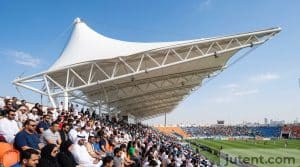

The roar of the crowd reverberates through the stadium, a wave of sound amplified by the very structure designed to shelter them. Above, a vast expanse of membrane fabric billows gently, a testament to precision engineering and architectural vision. This isn't just a cover; it's a meticulously designed stadium canopy tensile structure, a critical component of the modern sporting experience. For contractors and stadium developers, understanding the distinction between a basic grandstand cover and a professional-grade tensile canopy is paramount, especially when specifying a large stadium shade structure. The engineering complexity, material science, and regulatory hurdles involved in a professional specification demand a detailed approach, far beyond simply providing shelter from the elements.
What Defines a Stadium-Grade Tensile Canopy
A stadium-grade tensile canopy transcends the function of a simple rain or sun shelter. It is a sophisticated architectural system, engineered to meet stringent performance criteria for large public venues. Unlike a basic grandstand cover, which might primarily focus on weather protection for a limited seating area, a professional stadium canopy tensile structure integrates multiple functionalities. These include advanced structural stability against extreme weather events, precise acoustic performance, smooth integration of lighting and other utilities, and compliance with a complex web of building codes and safety regulations. The design process for such a structure involves detailed wind load analysis, seismic considerations, and material selection that prioritizes longevity and minimal maintenance. For instance, a professional stadium canopy will often feature high-performance membranes like PVDF or PTFE, chosen for their durability, UV resistance, and self-cleaning properties, ensuring a service life of 15 to 25+ years respectively. The steel framework, typically Q235B or Q355B, is treated with an epoxy zinc-rich primer and a fluorocarbon topcoat for superior corrosion resistance, a critical factor in exposed environments. This level of specification ensures the structure not only performs its primary function but also contributes to the overall aesthetic and operational excellence of the stadium.
Grandstand Canopy
Structural Systems: Cable-Stayed vs Cantilever for Large Stadium Spans
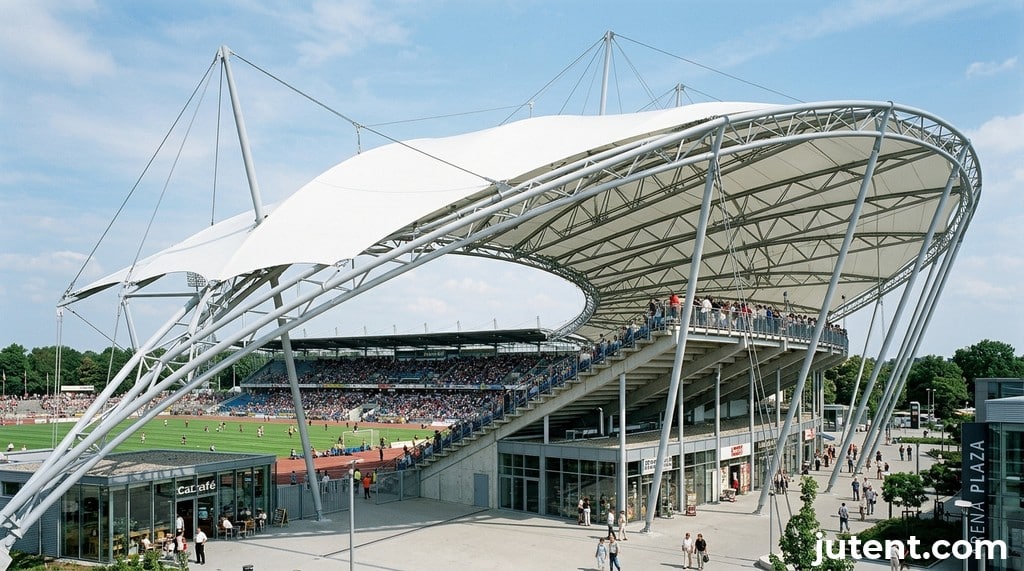
When designing a large stadium shade structure, the choice of structural system is a fundamental decision impacting span capability, aesthetic, and cost. The two primary systems for achieving large, unobstructed spans are cable-stayed and cantilever designs.
Cable-stayed systems utilize a network of high-strength steel cables anchored to masts or pylons, which then support the tensile membrane. This approach allows for exceptionally large spans with minimal internal columns, maximizing spectator sightlines. The cables work in tension, efficiently transferring loads to the central masts and foundations. This system is particularly effective for covering vast areas, offering inherent stability and a dramatic architectural presence. However, cable-stayed designs require meticulous engineering for cable tensioning, anchorage details, and foundation design to manage significant uplift and lateral forces.
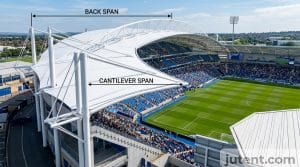
Cantilever systems, conversely, extend a structure outwards from a single point of support, typically a reliable column or truss. While effective for moderate spans, the structural demands increase exponentially with span length. Large cantilevered structures require massive support columns and deep foundations to counteract the bending moments and overturning forces. For the truly expansive covers required by professional stadiums, pure cantilever designs often become impractical or excessively expensive due to the sheer volume of steel required to maintain structural integrity.
| Feature | Cable-Stayed System | Cantilever System |
|---|---|---|
| Span Capability | Very large, ideal for covering entire stadiums | Moderate to large, suitable for grandstand sections |
| Structural Form | Elegant, light appearance with visible cables | Bold, projecting form, often with heavy support |
| Column Placement | Minimal internal columns, masts outside seating | Columns typically behind seating, can be very large |
| Cost Implications | High initial engineering, efficient material use | Potentially high material cost for large spans |
| Aesthetic Impact | Dynamic, modern, often iconic | Strong, commanding presence |
For stadium roof tensile membrane applications, cable-stayed systems often provide the most efficient and aesthetically pleasing solution for covering expansive areas without obstructing views. The intricate balance of tension and compression in these systems is a hallmark of advanced tensile architecture.
Grandstand Canopy Structures Guide
Acoustic Liner Integration: When and Why It's Specified
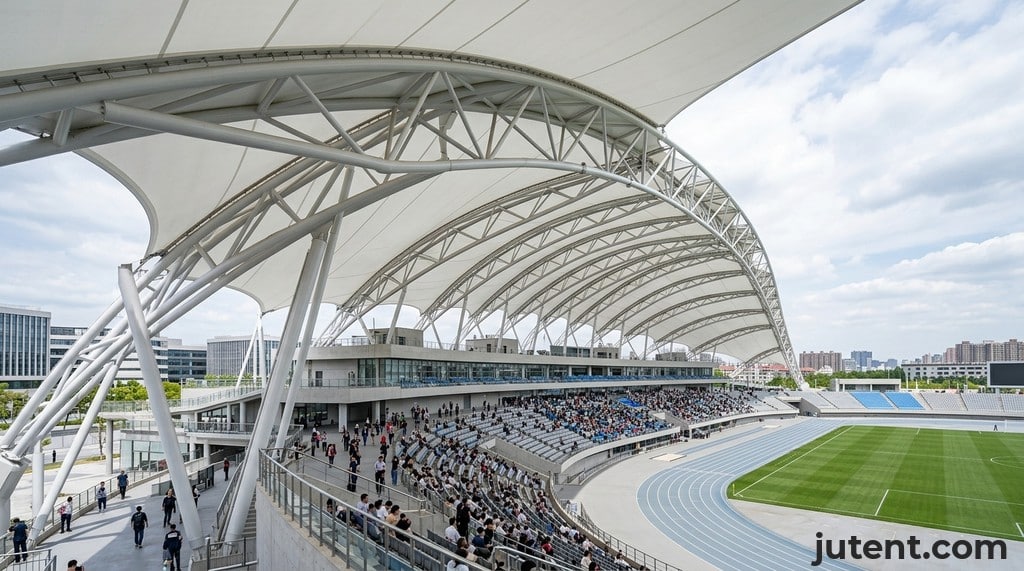
The acoustic environment within a stadium is a critical, yet often underestimated, aspect of its design, especially for a professional stadium canopy. The vast, hard surfaces of a typical stadium, combined with the reflective properties of tensile membranes, can lead to excessive reverberation, making announcements unclear, diminishing the impact of crowd noise, and potentially creating an uncomfortable experience for spectators. This is where acoustic liner integration becomes essential.
Acoustic liners are typically installed on the underside of the primary tensile membrane. These liners are engineered to absorb sound rather than reflect it, effectively reducing reverberation times within the stadium bowl. They are usually made from perforated or porous materials, often a lighter-weight fabric, sometimes with an insulating layer, designed to trap sound waves.
When is acoustic liner integration specified?
* Multi-purpose stadiums: Venues hosting not only sports but also concerts, conferences, or other events where clear audio is paramount.
* Enclosed or semi-enclosed stadiums: Where the roof structure significantly impacts the internal acoustic environment.
* High-capacity stadiums: Larger crowds generate more noise, necessitating greater sound control.
* Broadcast quality requirements: To ensure optimal sound for television and radio broadcasts.
Why is it specified?
* Enhanced spectator experience: Clearer announcements, better appreciation of crowd dynamics, and improved comfort.
* Improved speech intelligibility: Critical for safety announcements, commentary, and event information.
* Reduced noise pollution: Minimizing sound spillover into surrounding residential areas.
* Aesthetic and thermal benefits: Acoustic liners can also contribute to the visual appeal of the underside of the canopy and, in some cases, offer a degree of thermal insulation.
The integration of acoustic liners requires careful consideration during the initial stadium tensile roof design. It impacts the overall weight of the structure, the attachment methods, and the ventilation strategy for the cavity between the main membrane and the liner. Based on Jutent's experience across 400+ projects in 30+ countries, incorporating acoustic considerations early in the design phase is crucial for achieving optimal performance and avoiding costly retrofits.
Integrated Lighting: How Tensile Canopy Design Accommodates Stadium Lighting
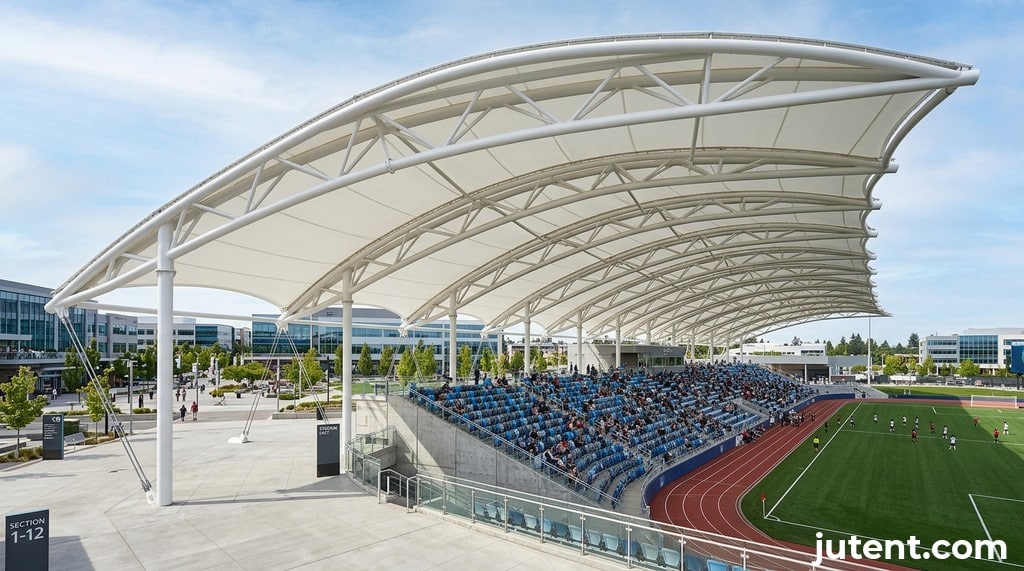
Modern stadium design demands more than just daylight; it requires sophisticated artificial lighting systems for evening events, broadcasts, and safety. Integrating these complex lighting schemes into a stadium canopy tensile structure presents unique challenges and opportunities. The tensile membrane itself, being translucent or opaque, significantly influences how light interacts with the stadium environment.
Key considerations for integrated lighting:
- Mounting Points and Load Capacity: The tensile structure must be designed with specific attachment points for lighting fixtures. These points need to be engineered to handle the weight of the luminaires, their associated cabling, and dynamic loads such as wind vibration. This often involves reinforcing specific areas of the steel framework or incorporating dedicated lighting trusses within the canopy structure.
- Cable Management: The vast expanse of a large stadium shade structure necessitates extensive cabling for power and control. The design must include discreet and protected pathways for these cables, preventing them from being exposed to the elements or detracting from the aesthetic. This often involves internal conduits within steel members or specially designed cable trays.
- Light Spill and Glare Control: The membrane's surface can reflect light, potentially causing glare for spectators or players. The design must account for the aiming angles of floodlights to minimize unwanted reflections. For translucent membranes, careful consideration is given to how light passes through, ensuring even illumination without hot spots.
- Maintenance Access: Lighting fixtures, especially those mounted high on a stadium roof tensile membrane, require periodic maintenance. The canopy design must incorporate safe and efficient access solutions, such as catwalks, maintenance platforms, or rigging points for specialized access equipment.
- Aesthetic Integration: Beyond functionality, the lighting system should complement the architectural form of the tensile canopy. Uplighting can highlight the membrane's curves and contours, creating a dramatic effect, while downlighting provides functional illumination. The choice of fixture type and placement is critical to achieving both performance and visual harmony.
For export projects, Jutent can provide design drawings, calculations, material specifications, installation manuals, and free remote guidance, subject to project scope and contract terms, ensuring that lighting integration is thoroughly planned from the outset. This collaborative approach helps contractors and developers achieve a fully functional and visually striking stadium lighting solution.
Multi-Authority Approval: What Large Stadium Projects Require
Navigating the regulatory landscape for a professional stadium canopy is one of the most complex aspects of any large-scale stadium project. Unlike smaller, simpler structures, a stadium canopy tensile system is subject to scrutiny from multiple governmental and quasi-governmental authorities, each with its own set of codes, standards, and approval processes. This multi-authority approval process is critical for ensuring public safety, structural integrity, and environmental compliance.
Key Authorities and Their Concerns:
- Local Building Department/Council: This is the primary authority for structural integrity, fire safety, accessibility, and general building code compliance. They will require detailed structural calculations, material specifications (e.g., Q235B, Q355B steel, PVDF/PTFE membrane fire ratings), wind load analyses, and seismic design reports.
- Fire Department/Fire Marshal: Focuses specifically on fire safety, including membrane flame spread ratings, smoke management, emergency egress routes, and sprinkler system integration. For large public assemblies, fire safety codes are exceptionally stringent.
- Environmental Agencies: May require assessments for noise pollution, light pollution, stormwater management, and material sustainability. The environmental impact of a large stadium shade structure can be significant and must be mitigated.
- Aviation Authorities: If the stadium is near an airport or flight path, the height and lighting of the canopy may require approval to ensure it does not interfere with air traffic.
- Occupational Health and Safety (OHS) Bodies: Concerned with worker safety during construction and maintenance, as well as public safety during operation. This includes safe access for maintenance, fall protection, and emergency procedures.
- Sports Governing Bodies: For professional sports venues, specific federations (e.g., FIFA, World Athletics) may have their own requirements for field lighting, spectator comfort, broadcast camera positions, and overall facility standards that impact the canopy design.
- Historical/Heritage Boards: If the stadium is located in a historically significant area, the aesthetic impact of the new stadium tensile roof design may require special approval.
The approval process typically involves multiple rounds of submissions, reviews, and revisions. Early engagement with all relevant authorities is crucial to identify potential conflicts or additional requirements. Jutent, as an ISO 9001 and SGS certified manufacturer, understands the importance of providing thorough documentation and technical support to assist contractors and developers through this rigorous approval process, ensuring that all aspects of the stadium canopy tensile design meet the necessary regulatory benchmarks.
What Jutent Can and Cannot Supply for Stadium Projects
Jutent Engineering has established a strong reputation for delivering high-quality tensile structures across a diverse range of applications. With over 400 projects in 30+ countries, our expertise lies in engineering and manufacturing reliable and aesthetically pleasing tensile membrane structures. However, it's important for contractors and stadium developers to understand our specific capabilities and project scope, particularly concerning professional stadium canopy projects.
What Jutent Can Supply:
- Design and Engineering: We provide thorough design drawings, structural calculations, and material specifications for tensile membrane structures. Our team can work with your architects and engineers to integrate our canopy designs into larger stadium plans.
- High-Quality Materials: We supply premium-grade materials, including Q235B and Q355B steel for frameworks, treated with epoxy zinc-rich primer and fluorocarbon topcoat for superior corrosion resistance. Our standard membranes are 1050 g/m² PVDF (10-year warranty, 15+ years service life) or PTFE (15-year warranty, 25+ years service life), with SS304 standard fittings and SS316 optional upgrades.
- Manufacturing: Our ISO 9001 and SGS certified facilities ensure precise fabrication of steel components and membrane panels to exact specifications.
- Project Management Support: We offer free remote guidance for installation and can provide on-site supervision as a paid service, ensuring the structure is erected correctly.
- Mid-size Grandstand Canopies: We excel in projects like school sports facilities, community stadiums, and mid-size professional grandstands, typically covering seating areas up to several thousand square meters. Our project scope is generally between $3,000 and $400,000 USD, with a minimum project size of 100 m².
What Jutent Cannot Supply (for very large professional stadiums):
- Full Stadium Roofs for 50,000+ Seat Venues: While we can design and supply large grandstand canopies, the engineering and logistical scale of covering an entire 50,000+ seat professional stadium (including the playing field) typically falls outside our standard project scope. These mega-projects often involve multi-billion dollar budgets and require a consortium of specialized firms.
- Integrated Building Systems Beyond the Canopy: We focus on the tensile structure itself. While we design for integration of lighting and acoustics, we do not supply or install the full stadium's electrical, HVAC, or complex audio-visual systems.
- Local Engineering and Construction for Mega-Projects: For very large stadium projects, local engineering firms and general contractors with specific experience in such massive undertakings are essential for overall project coordination, foundation work, and integration of all stadium components. We provide the tensile structure package, but the broader construction management remains with the client.
Typical technical values should always be written conservatively and described as subject to project design. For projects that fit our scope, Jutent offers a 1-year overall project warranty, ensuring peace of mind for our clients.
FAQ
- Can Jutent supply tensile canopies for large professional stadiums?
- Jutent's project scope is typically $3K–$400K USD. Large professional stadiums (50,000+ seats) are outside our standard scope. We specialise in school, community, and mid-size sports facility grandstand canopies. While we provide reliable engineering for significant structures, the sheer scale and multi-billion dollar budgets of mega-stadiums require a different project approach and consortium of specialized firms. We focus on delivering high-quality, engineered solutions for projects that align with our manufacturing and logistical capabilities.
- What is the difference between a grandstand canopy and a stadium roof?
- A grandstand canopy covers seating areas only, providing shade and weather protection for spectators. A stadium roof, conversely, may cover the entire playing field and seating areas, creating a fully or semi-enclosed environment. Tensile membrane is commonly used for both, but stadium roofs involve significantly more complex engineering due to their expansive spans, higher wind loads, and integration with thorough stadium systems like lighting, acoustics, and environmental controls. The structural demands and regulatory approvals for a full stadium roof are substantially greater.
Tell us your stadium project scope and we'll provide an honest assessment of what Jutent can supply and what requires local engineering input.