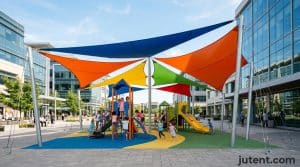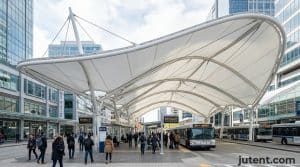

Not every shade structure manufacturer can deliver a playground canopy that meets UPF 50+ standards, local wind load requirements, and arrives on time. Here are the six questions that separate reliable suppliers from the rest.
Why Manufacturer Selection Matters for Playground Projects
Selecting the right playground canopy manufacturer is a critical decision for contractors and procurement managers. Beyond aesthetic appeal, a playground shade structure must meet stringent safety, durability, and regulatory requirements. Failure to vet a supplier thoroughly can lead to costly project delays, non-compliance issues, and potential safety hazards for children. A poorly designed or manufactured canopy might not withstand local weather conditions, offer inadequate UV protection, or require premature replacement, impacting your project’s reputation and budget.
Key considerations include the manufacturer’s technical capabilities, adherence to international standards, material quality, and logistical efficiency. A reliable playground shade supplier will demonstrate transparency in their processes, provide verifiable documentation, and offer reliable support throughout the project lifecycle. This due diligence ensures the final installation is safe, compliant, and delivers the expected service life. For more information on specific shade solutions, visit our Playground Shade section.
Question 1: Do You Have UPF 50+ Test Certificates for Your Membrane?
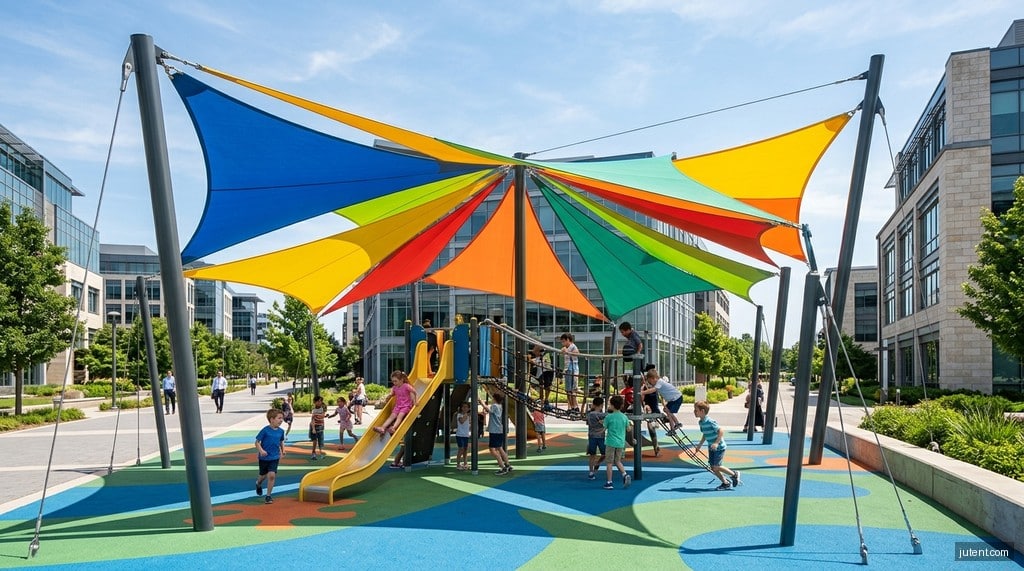
Ultraviolet Protection Factor (UPF) is paramount for playground canopies, directly impacting the safety of children. A UPF 50+ rating indicates that the fabric blocks over 98% of harmful UV radiation, offering excellent protection. When evaluating a playground canopy OEM, always request official test certificates for their membrane materials. These certificates should be issued by an accredited, independent laboratory and clearly state the UPF rating. Relying solely on a manufacturer’s claim without documented proof is a significant risk.
Jutent Engineering, for instance, exclusively uses high-quality PVDF and PTFE membranes, with standard options like 1050 g/m² PVDF, all rigorously tested to ensure UPF 50+ compliance. These materials not only provide superior UV protection but also offer exceptional durability and longevity, with PVDF membranes typically carrying a 10-year warranty and a 15+ year service life, and PTFE membranes a 15-year warranty with a 25+ year service life. Based on Jutent’s experience across 400+ projects in 30+ countries, verifying these certifications is a non-negotiable step in procurement. For more details on our commitment to quality, see About.
Question 2: Can You Provide Wind Load Calculations for My Location?
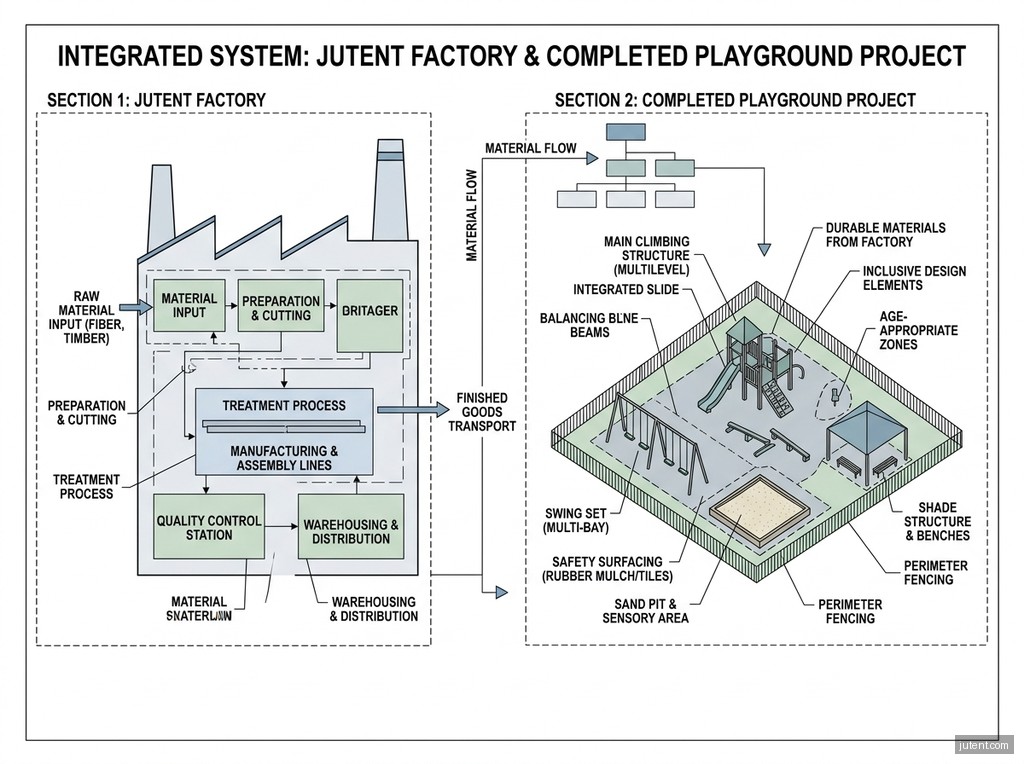
Wind load is a critical engineering consideration for any outdoor structure, especially large-span tensile canopies in playgrounds. Local building codes and environmental conditions dictate specific wind load requirements that must be met to ensure structural integrity and safety. A competent playground tensile canopy manufacturer China should be able to provide detailed structural analysis and wind load calculations tailored to your project’s exact geographical location. This typically involves using engineering software to model the structure’s response to anticipated wind speeds and pressures.
Request documentation that demonstrates their engineering team’s capability to perform these calculations. This includes design drawings, material specifications, and structural reports. These documents should clearly outline the design parameters, including maximum wind speeds, exposure categories, and applicable building codes (e.g., ASCE 7, Eurocode). A manufacturer that cannot readily provide these calculations or demonstrate an understanding of local wind load requirements is a red flag. The structural design must account for both static and dynamic wind effects, ensuring the canopy remains stable and safe under extreme weather conditions.
Question 3: What Steel Specification Do You Use for Commercial Playground Shade?
The quality and specification of the steel framework are fundamental to the longevity and safety of a commercial playground shade structure. For export projects, it’s crucial to understand the steel grades and surface treatments employed by the playground shade factory. Reputable manufacturers will specify high-grade structural steel, such as Q235B or Q355B, which offer excellent strength and weldability suitable for demanding outdoor applications.
Equally important is the surface treatment to prevent corrosion. Acceptable treatments include hot-dip galvanizing, which provides a durable zinc coating, or a multi-layer paint system like epoxy zinc-rich primer followed by an acrylic or fluorocarbon topcoat. Always inquire about the thickness of the galvanization or the paint system’s total dry film thickness. For connection hardware, SS304 is standard, with SS316 available as an optional upgrade for enhanced corrosion resistance in harsh environments. A manufacturer should be transparent about their steel sourcing and fabrication processes, providing material certificates and quality control documentation for the steel components.
Question 4: What Is Your Factory Production Lead Time?
Project timelines are often tight, making a manufacturer’s production lead time a critical factor in supplier selection. Understanding the typical lead time for a playground canopy manufacturer is essential for accurate project scheduling and avoiding costly delays. Production lead times can vary significantly based on the complexity of the design, the size of the project, the manufacturer’s current order book, and material availability.
Always request a clear, itemized production schedule from the initial design approval to the readiness for shipment. A typical project for a tensile membrane structure (minimal steel) might range from $30–$50/m², with PVDF membrane, simple form structures at $40–$70/m², and complex forms at $60–$90/m². PTFE membrane projects typically add ~$20/m² to the PVDF range, with a minimum project scope of 100 m². For export projects, Jutent can provide design drawings, calculations, material specifications, installation manuals, and free remote guidance, subject to project scope and contract terms. A reliable manufacturer will communicate realistic timelines and provide regular updates on production progress.
Question 5: Can You Provide References from Similar Playground Projects?
Verifying a playground canopy manufacturer’s experience and track record is a crucial step in due diligence. Requesting references from previous clients, particularly those with similar playground or commercial shade projects, provides invaluable insight into their capabilities, reliability, and quality of work. A reputable manufacturer will be eager to share contact information for past clients who can attest to their performance.
When contacting references, inquire about:
* Project scope and complexity: Was the project similar in size and design to yours?
* On-time delivery: Did the manufacturer meet agreed-upon deadlines?
* Product quality: Was the final product as specified and free from defects?
* Communication and responsiveness: How effectively did they communicate throughout the project?
* Post-delivery support: What was their responsiveness to any issues or questions after installation?
Based on Jutent’s experience across 400+ projects in 30+ countries, a manufacturer’s willingness to provide verifiable references is a strong indicator of their confidence in their work and their commitment to client satisfaction.
Question 6: What Installation Support Do You Provide?
The successful installation of a playground canopy is as important as its manufacturing quality. Even the best-engineered structure can fail if not installed correctly. When evaluating a playground shade supplier, inquire about the level of installation support they offer. For international projects, direct on-site installation by the manufacturer’s team may not always be feasible or cost-effective.
However, a reliable manufacturer should provide thorough installation guidance. This typically includes detailed installation manuals, engineering drawings, and potentially remote technical support via video calls or online consultations. Some manufacturers, like Jutent, offer on-site supervision as a paid service, where an experienced engineer guides your local installation team through the process. This can be particularly valuable for complex designs or for teams unfamiliar with tensile structure installation. Ensure the support offered aligns with your team’s capabilities and the project’s complexity to ensure a smooth and safe installation process.
FAQ
- What is the advantage of sourcing a playground canopy from a Chinese manufacturer?
- Sourcing a playground canopy from a Chinese manufacturer often provides a significant cost advantage, with supply costs typically 30–50% lower than those from local fabricators in many Western markets. This cost efficiency stems from economies of scale, competitive labor costs, and established supply chains for materials like high-quality PVDF and PTFE membranes and structural steel. Despite the lower cost, leading Chinese manufacturers like Jutent adhere to international quality standards, including ISO 9001 and SGS certifications, ensuring that cost savings do not compromise product quality or safety.
- How do I verify that a Chinese playground canopy manufacturer meets UPF 50+ standards?
- To verify UPF 50+ compliance from a Chinese playground canopy manufacturer, you must request official test certificates for their membrane materials. These certificates should be issued by an accredited, independent third-party laboratory, not just an internal company document. The certificate should clearly state the UPF rating, the testing methodology used, and the specific membrane product it applies to. A reputable manufacturer will readily provide these documents, demonstrating their commitment to product safety and transparency. Always cross-reference the membrane type on the certificate with the material specified for your project.
Contact Jutent with your playground project details and we’ll answer all six questions with documentation within 48 hours.