
“`html
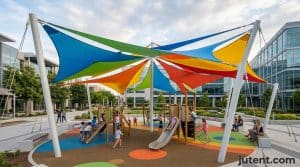
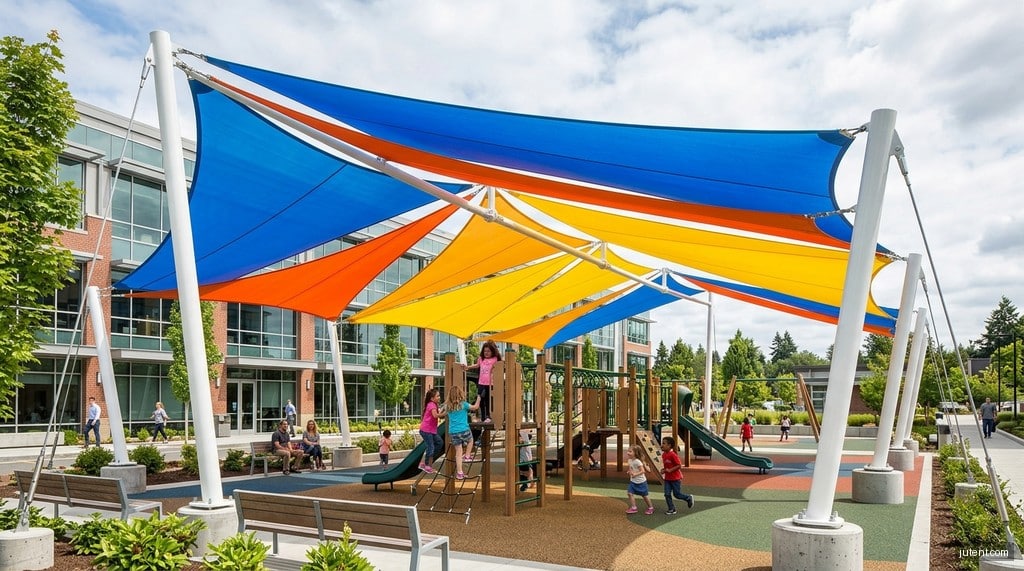
The afternoon sun beat down on the newly installed playground, its vibrant colors a stark contrast to the harsh, unshaded ground. A young architect, clipboard in hand, surveyed the scene, picturing the laughter and play that would soon fill the space. But a critical element was missing: shade. Not just any shade, but a solution that offered expansive coverage, superior UV protection, and the structural integrity to withstand years of energetic play. This wasn't a job for simple shade sails; this called for the engineered elegance and enduring performance of a playground tensile canopy.
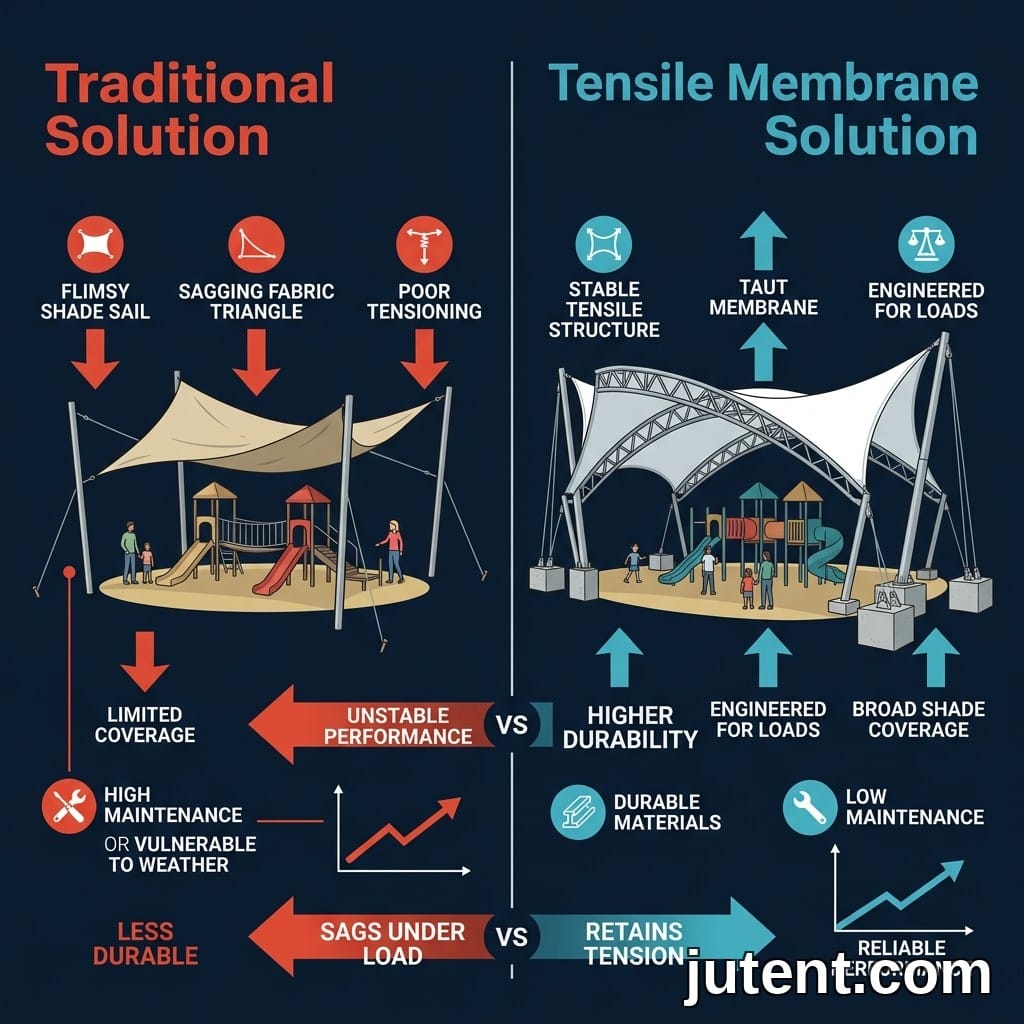
When Tensile Canopies Outperform Shade Sails for Playground Shade
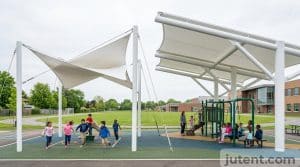
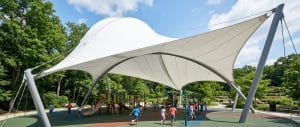
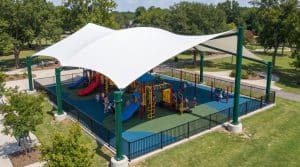
When designing a playground, the choice of shade structure is paramount for child safety and comfort. While shade sails offer a quick and often more budget-friendly initial solution, playground tensile canopies present a compelling alternative, particularly for larger, more complex, or high-traffic play areas. Tensile canopies are engineered structures, designed for specific wind loads, snow loads (where applicable), and long-term performance, making them a more durable and reliable choice for commercial applications. They excel in providing expansive, uninterrupted shade, which is crucial for protecting children from harmful UV radiation during peak play hours. Unlike shade sails, which rely on tensioned fabric between multiple attachment points, tensile canopies feature a more rigid structural framework, typically steel, supporting a tensioned membrane. This design allows for greater control over the shaded footprint and superior resistance to environmental factors. Based on Jutent's experience across 400+ projects in 30+ countries, tensile canopies consistently deliver on longevity and aesthetic integration for demanding public spaces.
Playground Shade
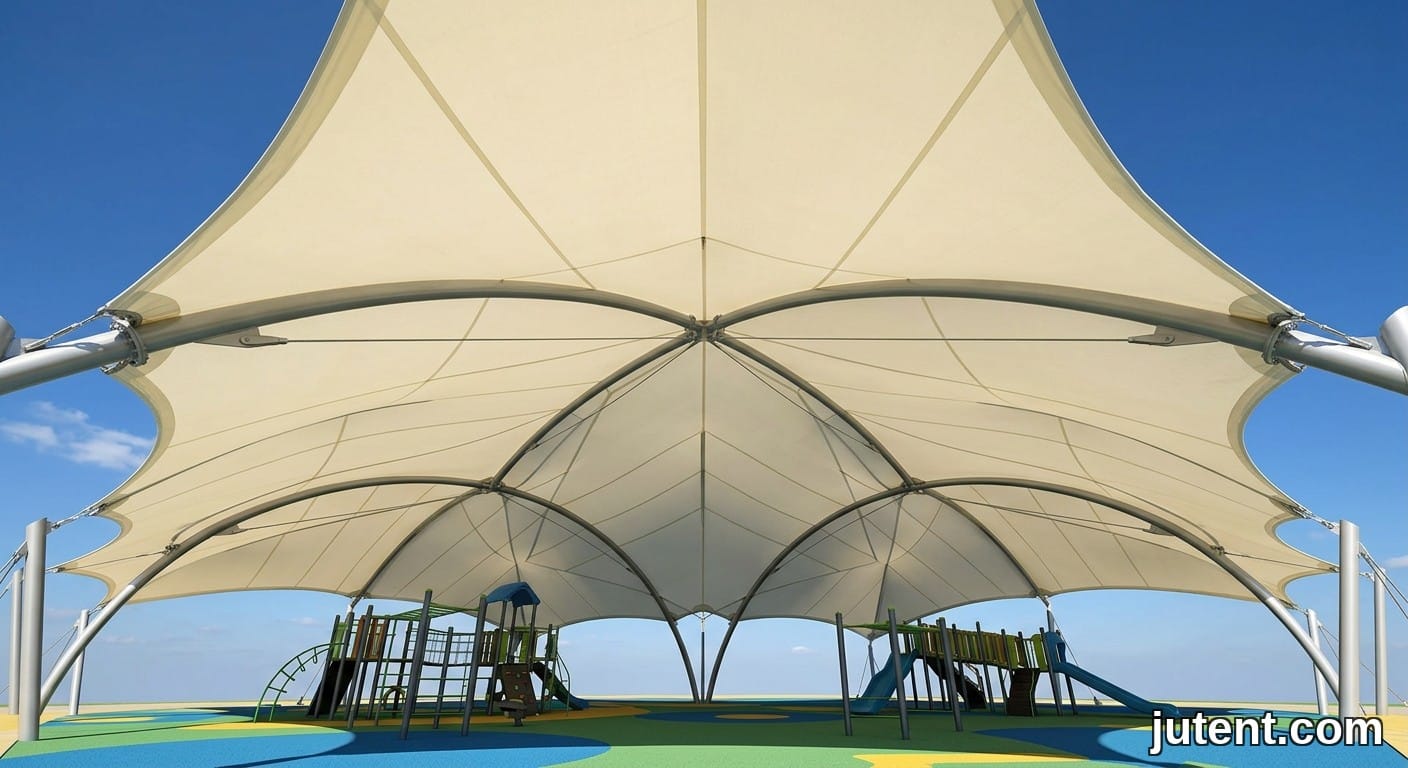
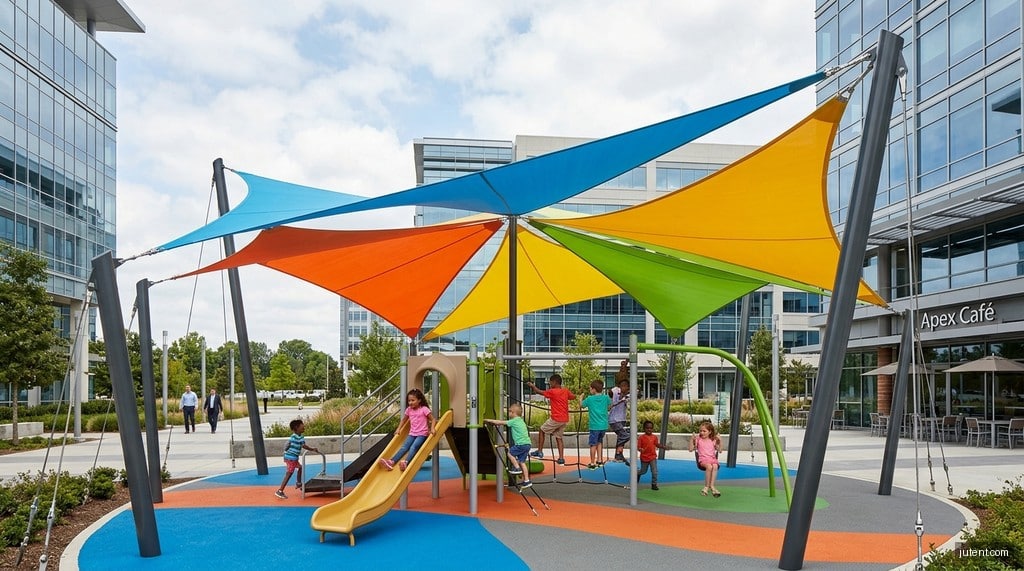
Playground Tensile Canopy Span Options: What Tensile Membrane Structures Cover That Shade Sails Can't
A tensile canopy is a type of tensile membrane structure — an engineered system where a flexible fabric membrane is stretched over a steel frame to create durable, weather-resistant shade. Unlike shade sails, tensile canopies are designed using structural analysis software like SAP2000 to withstand specific wind and snow loads.
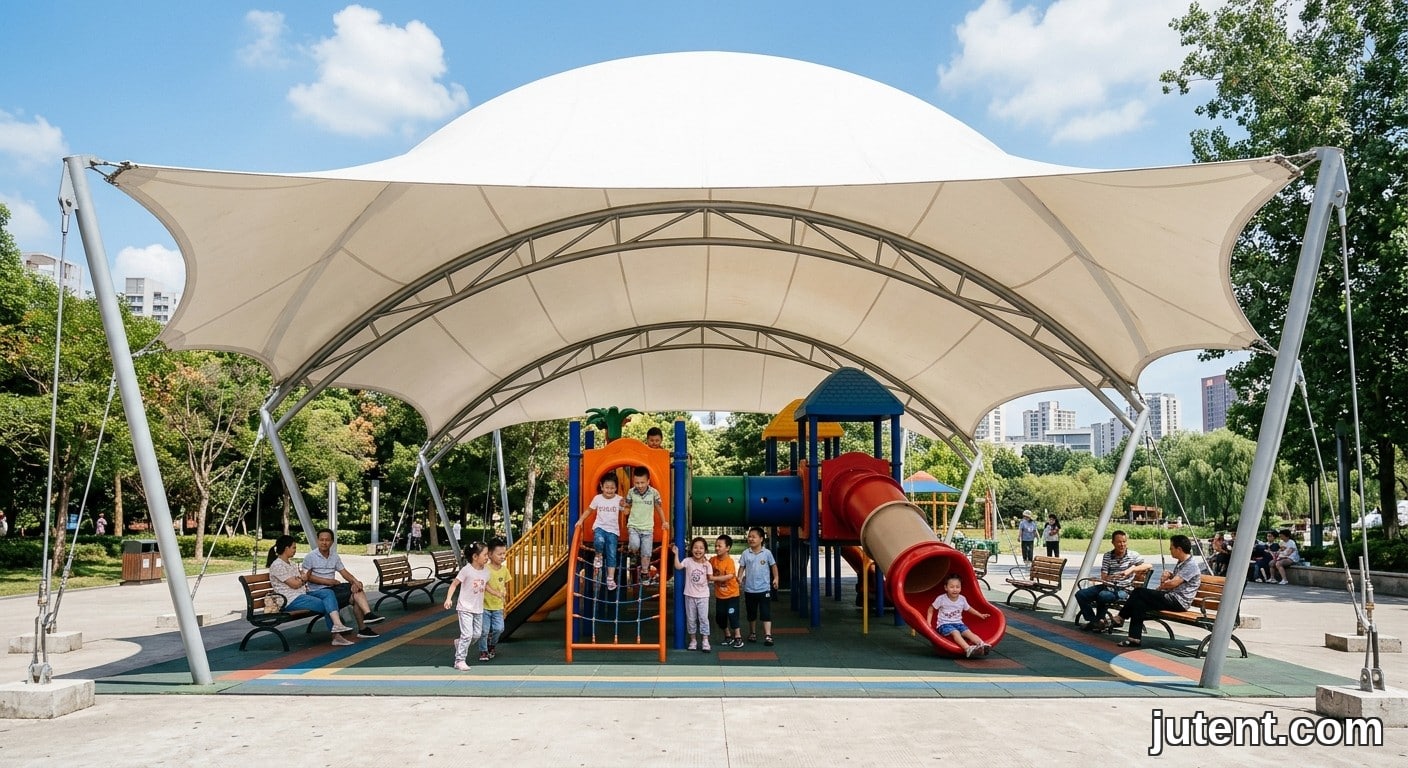
The ability to cover significant areas without intermediate supports is a primary advantage of a playground tensile canopy over traditional shade sails. Shade sails, by their nature, are limited by the distance between their anchor points and the inherent sag of the fabric. To cover a large playground, multiple shade sails are often required, leading to overlapping shadows, increased complexity in rigging, and a less cohesive aesthetic. A tensile playground shade, conversely, can achieve impressive clear spans, often exceeding 10–20 meters in a single bay, and much larger areas with multi-bay configurations. This capability is critical for covering extensive play equipment, sandpits, or entire activity zones, ensuring children can move freely without encountering unshaded patches or structural obstructions. The engineered framework of a tensile membrane structure distributes loads efficiently, allowing for fewer, strategically placed columns that minimize interference with play activities. This means a single, well-designed tensile canopy can often replace numerous smaller shade sails, offering a cleaner design and superior functionality.
Playground Shade Structures Guide
Membrane Grade for Playground Tensile Canopies: PVDF vs Shade Cloth
The choice of membrane material is a critical design decision for a playground tensile canopy, directly impacting UV protection, durability, and maintenance. For commercial playground applications, the primary considerations are PVDF-coated architectural membrane and specialized shade cloth.
PVDF (Polyvinylidene Fluoride) Coated Membrane:
This is Jutent's standard recommendation for playground tensile membrane structures. PVDF membranes, typically 1050 g/m², offer superior performance characteristics:
* UV Protection: Provides near 100% UV block, crucial for child safety.
* Durability: Exceptional tear strength, weather resistance, and a service life of 15+ years, backed by a 10-year warranty.
* Maintenance: Self-cleaning properties due to the smooth, non-porous surface, reducing long-term upkeep.
* Aesthetics: Available in a range of colors, maintaining vibrancy over time.
* Fire Rating: Often meets s
“`