
PVDF and PTFE membranes both work for outdoor stage canopies, but they perform differently over time. This comparison covers UV resistance, fire rating, acoustic performance, and the cost difference that matters for a performance venue project.
Choosing the right membrane for an outdoor stage canopy involves balancing initial cost with long-term performance and specific project requirements. For contractors and project managers, understanding the nuances between PVDF (Polyvinylidene Fluoride) and PTFE (Polytetrafluoroethylene) is crucial for delivering a durable, compliant, and cost-effective solution. This guide will help you navigate the decision-making process by comparing these two primary membrane options across key performance indicators.
A tensile membrane structure is a lightweight, flexible roof system that uses tensioned fabric (like PVDF or PTFE) supported by a steel frame to create large, column-free spans.
What PVDF and PTFE Membranes Are (and What They're Not)
Both PVDF and PTFE are high-performance polymer coatings applied to a woven fiberglass or polyester fabric base, creating a flexible, durable material suitable for tensile structures. They are not rigid panels or traditional roofing materials; rather, they are engineered fabrics designed to withstand environmental stressors while maintaining structural integrity and aesthetic appeal.
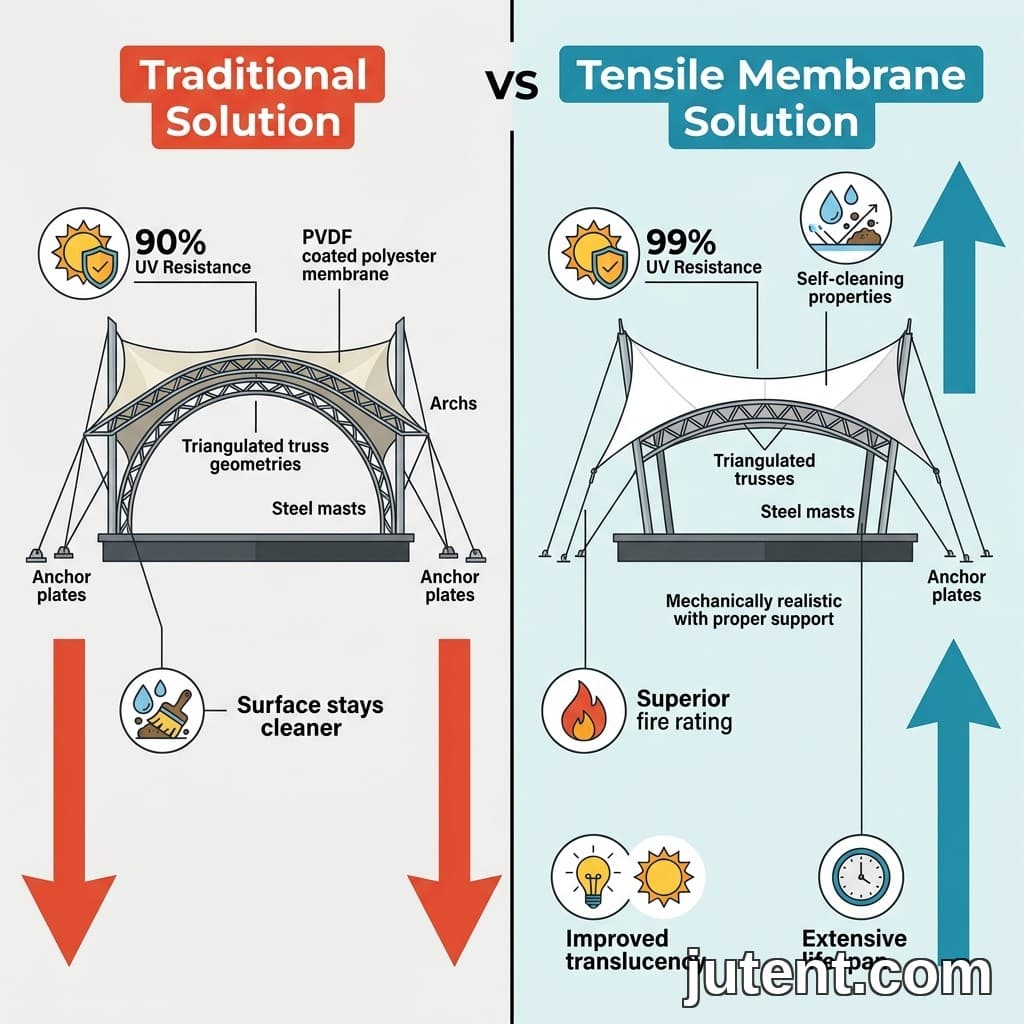
PVDF membrane typically consists of a polyester fabric coated with PVC (Polyvinyl Chloride) and then finished with a PVDF topcoat. This topcoat provides excellent dirt resistance, UV protection, and extends the lifespan of the PVC. It's a versatile material, offering a good balance of performance and cost, making it a popular choice for a wide range of tensile architecture, including stage canopies.
PTFE membrane, on the other hand, is a fiberglass fabric coated with PTFE. This combination results in a highly durable, self-cleaning, and extremely long-lasting material. Unlike PVDF, PTFE does not rely on a separate topcoat for its performance characteristics; the PTFE coating itself provides superior resistance to UV radiation, chemicals, and extreme temperatures.
It's important to understand that while both are “membrane grade,” their underlying compositions and coating technologies differ significantly, leading to distinct performance profiles. For example, a standard membrane might be 1050 g/m² PVDF or PTFE, but their inherent properties dictate their suitability for different project demands.
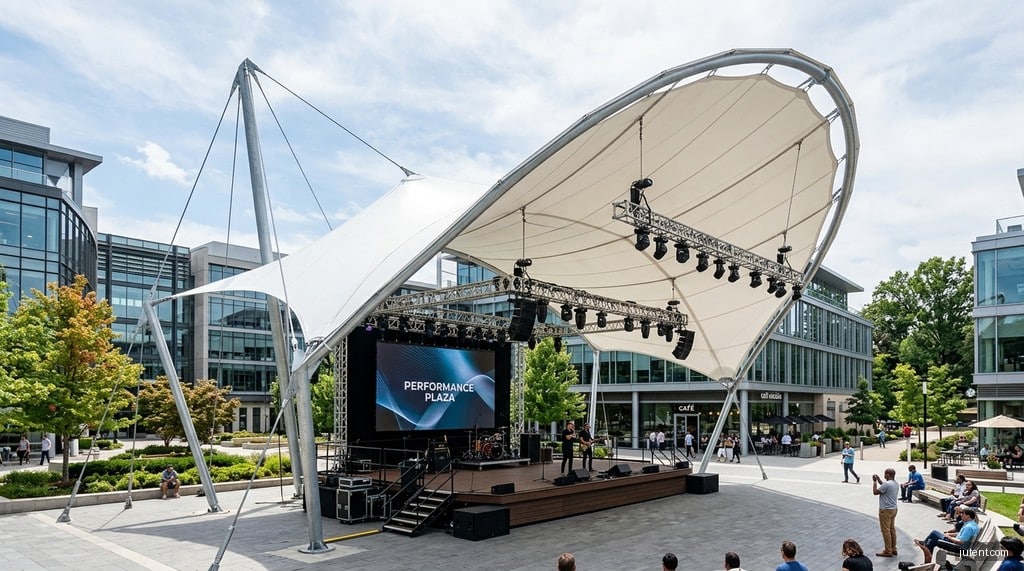
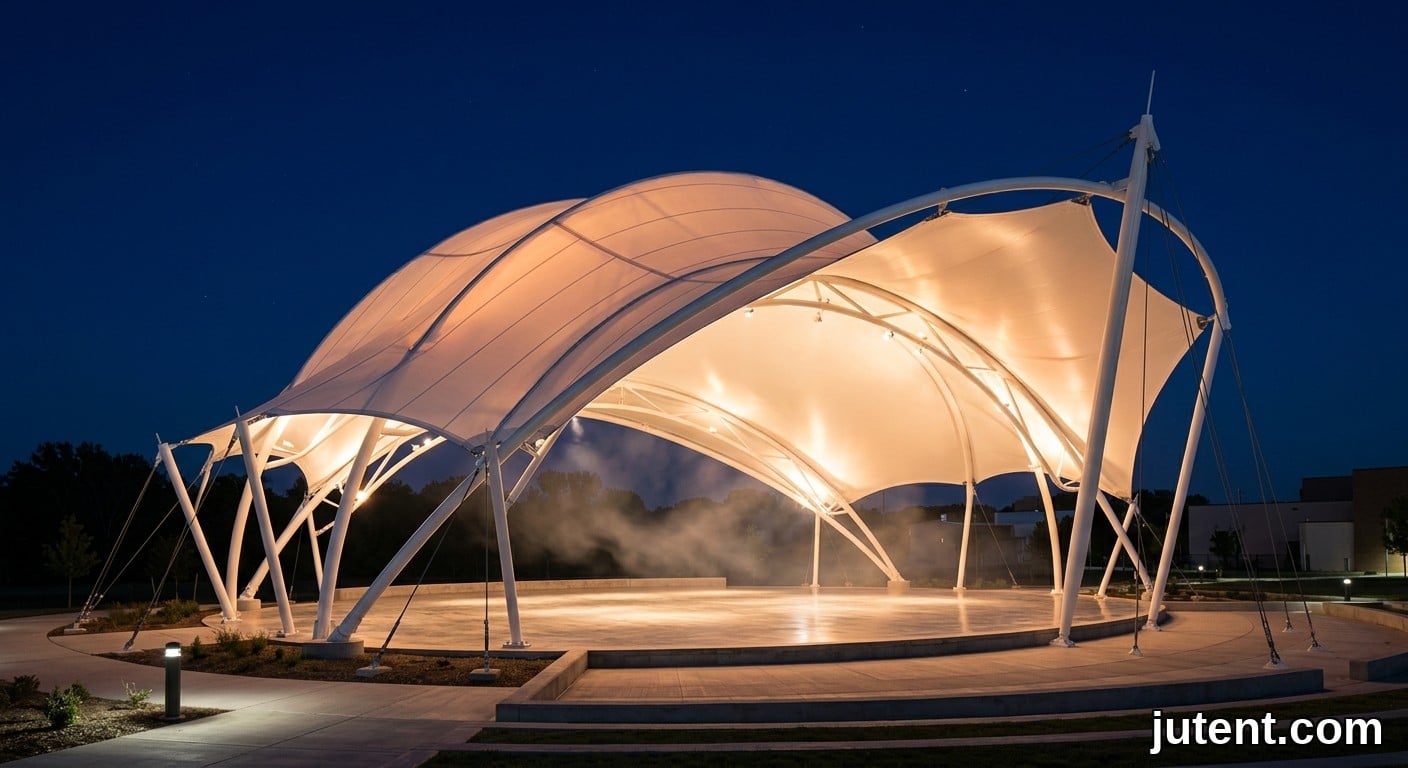
UV Resistance Comparison: How PVDF and PTFE Perform After 10 Years Outdoors
UV resistance is a critical factor for any outdoor structure, especially a stage canopy exposed to direct sunlight for extended periods. The sun's ultraviolet radiation can degrade materials over time, leading to discoloration, loss of strength, and reduced service life.
PVDF membranes, with their PVDF topcoat, offer good UV resistance. The topcoat acts as a protective barrier, reflecting a significant portion of UV radiation and preventing the underlying PVC from degrading rapidly. This protection contributes to a typical 10-year warranty and a 15+ year service life for PVDF membranes. Over a decade, a well-maintained PVDF canopy will generally retain its structural integrity and aesthetic appearance, though some subtle yellowing or loss of vibrancy might occur depending on the specific formulation and environmental conditions.
PTFE membranes, by contrast, exhibit superior UV resistance. The PTFE coating itself is inherently stable under UV exposure, meaning it does not degrade or discolor significantly over time. This exceptional stability is a key reason why PTFE membranes come with a 15-year warranty and offer a 25+ year service life. After 10 years outdoors, a PTFE stage canopy will typically show virtually no signs of UV degradation, maintaining its original translucency and strength. This long-term stability makes PTFE an excellent choice for permanent installations where longevity and consistent appearance are paramount.

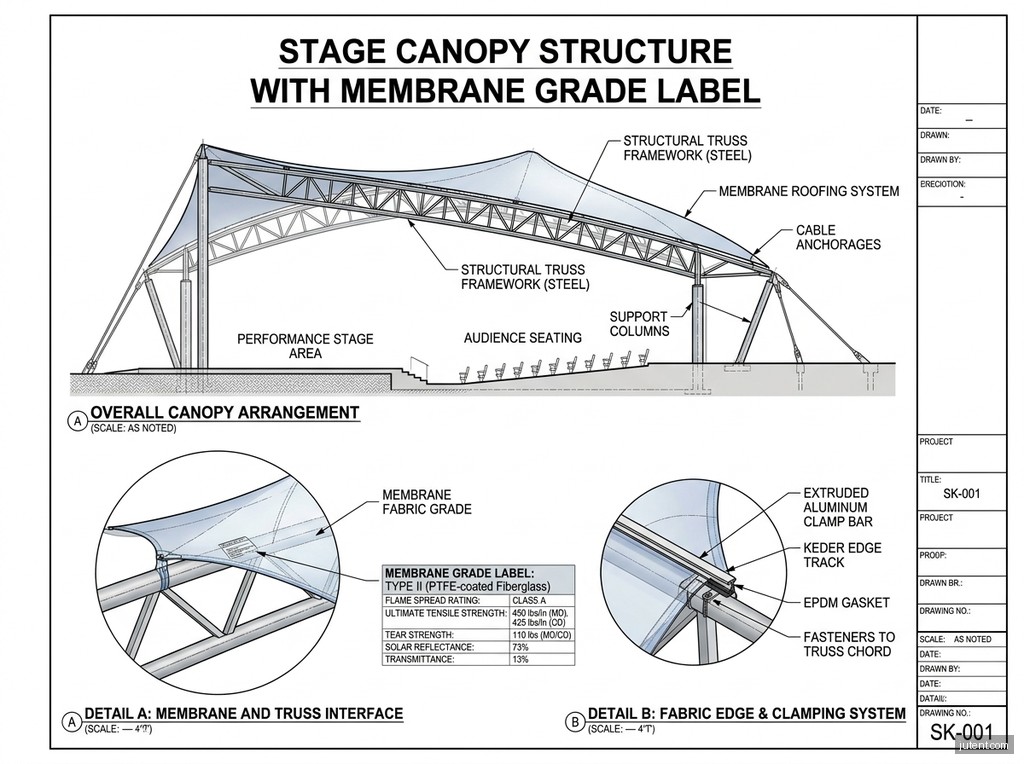
Pvdf Vs Ptfe Membrane Comparison
Fire Rating: What Performance Venue Projects Typically Require
Fire safety is a non-negotiable aspect of any public venue, and stage canopies are no exception. Performance venue projects often have stringent fire rating requirements to ensure the safety of performers and audiences. Understanding how PVDF and PTFE membranes perform under fire conditions is essential for compliance and risk management.
PVDF membranes, due to their PVC component, are typically rated as flame retardant. They are designed to self-extinguish when the flame source is removed and will not contribute significantly to the spread of fire. Specific fire ratings for PVDF can vary based on the manufacturer and formulation, but they generally meet international standards for flame retardancy, such as NFPA 701 or European classifications like B1. For many outdoor stage applications, this level of fire resistance is sufficient and meets local building codes.
PTFE membranes, however, offer superior fire performance. The fiberglass fabric base is inherently non-combustible