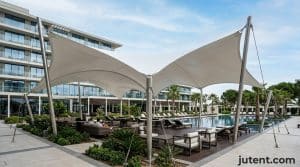

Enhancing Hotel Aesthetics with Tensile Canopies: Guest Experience & Modern Design
When considering architectural enhancements for a hotel property, developers and contractors face a critical decision: how to balance aesthetic appeal, functional utility, and long-term value. A hotel tensile canopy presents a compelling solution, offering a distinctive blend of modern design and practical benefits. This guide will clarify what is a hotel tensile canopy, how these structures function, the various types available, and what realistic cost expectations entail. By understanding these core elements, you can make an informed decision about whether a tensile canopy aligns with your project's vision and budget.
What a Hotel Tensile Canopy Is and What It Isn't
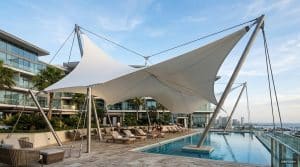
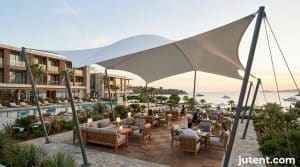
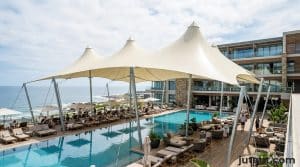
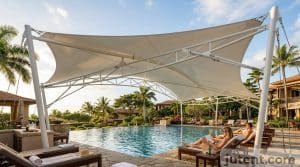
A hotel tensile canopy is a permanent tensile membrane structure specifically engineered for commercial hospitality applications. Unlike temporary tents or retractable awnings, these structures are designed for longevity, structural integrity, and architectural impact. They consist of a high-strength fabric membrane tensioned over a supporting steel framework, creating dynamic, often curvilinear forms. The primary function of a hotel tensile canopy is to provide weather protection – shade from sun, shelter from rain – while simultaneously enhancing the visual appeal and functional space of a hotel. This could be for entranceways, outdoor dining areas, pool decks, or walkway covers.
What it isn't, crucially, is a conventional rigid roof. Tensile canopies use the strength of tension rather than compression, allowing for expansive, column-free spaces and unique sculptural designs that are difficult to achieve with traditional building materials. They are engineered to withstand specific environmental loads, including wind and snow, making them a durable, long-term asset. For a deeper look at how these structures integrate into hospitality design, visit Hotel Leisure.
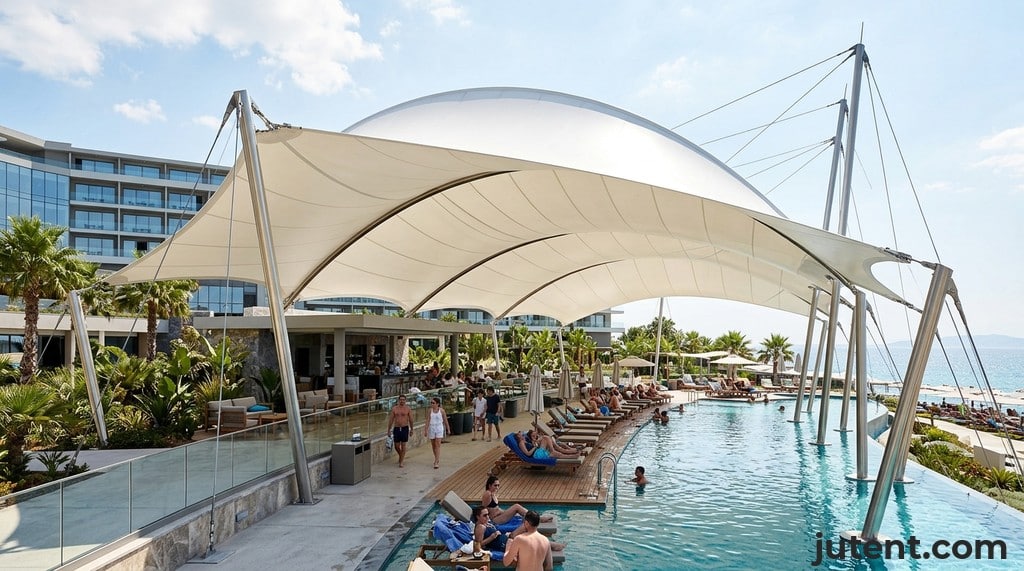
How Hotel Tensile Canopy Structures Work: Steel, Membrane, and Drainage
The fundamental principle behind a hotel tensile canopy lies in the interaction between its three main components: the steel support structure, the membrane fabric, and the integrated drainage system. The steel framework, typically constructed from Q235B or Q355B grade steel, provides the necessary anchor points and shape-defining elements. This steel is meticulously fabricated and treated with an epoxy zinc-rich primer followed by an acrylic or fluorocarbon topcoat, or hot-dip galvanizing, to ensure corrosion resistance and extended service life.
The membrane, commonly 1050 g/m² PVDF or PTFE, is then stretched and tensioned across this framework. This tension is critical; it gives the fabric its structural rigidity and ability to resist external forces like wind uplift and snow loads. The membrane's inherent flexibility allows for complex, organic shapes that are both aesthetically pleasing and structurally efficient.
Effective drainage is paramount for the longevity and performance of any tensile structure. The curvilinear forms of tensile canopies are not merely aesthetic; they are engineered to shed rainwater efficiently. Valleys and low points are strategically designed to direct water towards integrated gutter systems or downspouts, preventing ponding and ensuring the structural integrity of the membrane. This careful design ensures the canopy remains functional even in heavy rain environments. For a more detailed technical overview, refer to Hotel Tensile Canopy Guide.
Types of Hotel Tensile Canopy: Common Structural Forms
The versatility of tensile architecture allows for a wide array of structural forms, each offering distinct aesthetic and functional characteristics. Understanding these common types is essential for developers and contractors to select the most suitable option for their hotel project.
One of the most prevalent forms is the Hypar (Hyperbolic Paraboloid). This structure is characterized by its saddle shape, created by tensioning a membrane between high and low points. Hypars are excellent for shedding water and offer a dynamic, sculptural appearance, often used for entrance canopies or outdoor dining areas.
Another common type is the Cone (Conical) structure. These canopies rise to a central high point, often supported by a mast, and slope downwards, resembling a tent. Conical forms are highly efficient for rainwater runoff and can create dramatic, soaring spaces, ideal for large gathering areas or central courtyards.
Arch-supported tensile canopies utilize curved steel arches to define the primary shape, with the membrane stretched beneath or over them. This creates elegant, sweeping forms that can span considerable distances, making them suitable for walkways, pool enclosures, or expansive event spaces.
Finally, Barrel Vaults offer a more traditional, yet still visually striking, curved roof profile. These are often used to cover long, linear areas such as pedestrian walkways or outdoor corridors, providing consistent shelter and a clean, modern aesthetic. The choice among these types often depends on the desired architectural statement, the functional requirements of the space, and the specific site conditions.
What a Hotel Tensile Canopy Costs: A Realistic Range
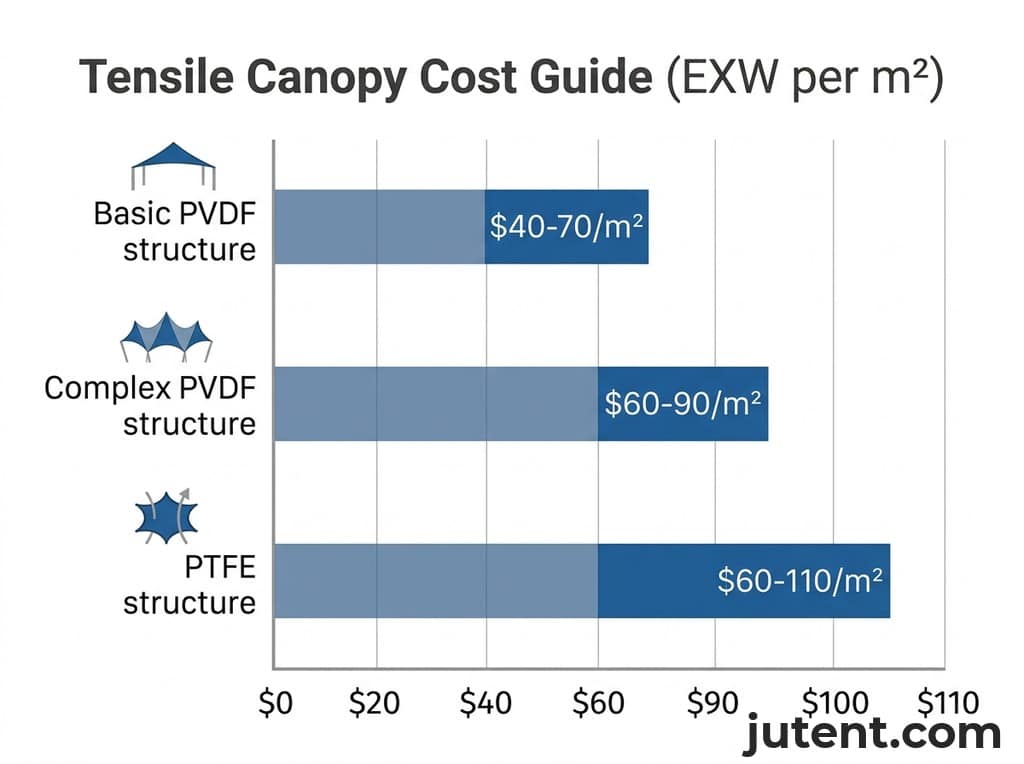
Understanding the cost implications of a hotel tensile canopy is crucial for project budgeting. Pricing for these structures is typically quoted on a per square meter (m²) basis, and several factors influence the final cost. Based on Jutent's experience across 400+ projects in 30+ countries, a realistic range for a minimum project scope of 100 m² can be established.
For a tensile membrane structure with minimal steel support, such as a simple shade sail, costs can start from $30–$50/m². However, most hotel applications require more robust, permanent structures.
For PVDF membrane canopies with a simple form (e.g., basic hypar or small conical structures), expect a range of $40–$70/m². If the design calls for a more complex form, involving intricate geometry or larger spans, the cost for PVDF membrane can increase to $60–$90/m².
Should the project specify PTFE membrane, known for its exceptional durability and self-cleaning properties, an additional ~$20/m² should be added to the PVDF ranges. This means a simple PTFE canopy might cost $60–$90/m², while a complex PTFE design could be $80–$110/m².
These figures are EXW (Ex Works) and do not include shipping, installation, or local taxes. It's important to remember that these are general guidelines; actual costs are subject to project-specific design, engineering requirements, membrane selection, and the complexity of the steel framework. For export projects, Jutent can provide design drawings, calculations, material specifications, installation manuals, and free remote guidance, subject to project scope and contract terms.
When a Hotel Tensile Canopy Makes Sense for Your Project
Deciding whether a hotel tensile canopy is the right fit for your development or renovation project involves weighing its unique benefits against traditional construction methods. A tensile canopy makes excellent sense when the project demands a combination of striking aesthetics, functional outdoor space, and long-term durability.
Consider a tensile canopy if your goal is to create an iconic architectural feature that differentiates your hotel. The sculptural forms and modern appeal of these structures can significantly elevate a property's visual identity, attracting guests and enhancing brand perception. They are particularly effective for grand entranceways, creating a memorable first impression.
Functionally, if you need to provide weather-protected outdoor areas – for al fresco dining, poolside lounging, event spaces, or covered walkways – a tensile canopy offers an elegant and efficient solution. Unlike solid roofs, the translucent membrane allows natural light to filter through, maintaining an open, airy feel while offering protection from sun and rain. This extends the usability of outdoor spaces, increasing revenue potential and guest satisfaction.
tensile structures often have a lighter environmental footprint compared to conventional buildings, requiring less material and offering opportunities for natural ventilation. Their relatively quicker installation times can also be a significant advantage in project scheduling. When the objective is to blend innovative design with practical utility and a focus on guest experience, a hotel tensile canopy is a compelling choice.
FAQ
- Q: How long does a hotel tensile canopy last?
- A: The lifespan of a hotel tensile canopy depends on its components. PVDF membrane typically has a service life of 15–20 years, backed by a 10-year warranty. PTFE membrane offers superior longevity, with a service life exceeding 25 years and a 15-year warranty. The steel structure, treated with advanced corrosion protection like hot-dip galvanizing or epoxy zinc-rich primer with a fluorocarbon topcoat, is designed for a service life of 25–30 years, ensuring long-term structural integrity.
- Q: Is a hotel tensile canopy suitable for heavy rain environments?
- A: Yes, hotel tensile canopies are specifically engineered for effective rainwater management. Their unique curvilinear forms are designed to shed water efficiently, directing it towards integrated drainage systems. Engineers meticulously calculate and design the membrane's tension and shape to prevent water ponding, ensuring that the structure remains stable and functional even during periods of heavy rainfall. This makes them a reliable solution for various climatic conditions.
If you're considering a hotel tensile canopy, send us your project brief for a free consultation.