
Outdoor Stage Canopies: Essential Overview for Venue Developers on Types, Function, and Costs
When planning a performance venue, a critical decision revolves around protecting your stage and performers from the elements. An outdoor stage canopy is a tensile membrane structure that covers a performance stage, protecting performers and equipment from weather while allowing sound and light to function effectively. This guide explains how they work and what they cost, providing a framework for developers and contractors to make informed choices.
What an Outdoor Stage Canopy Is and What It Isn't
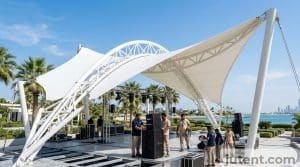
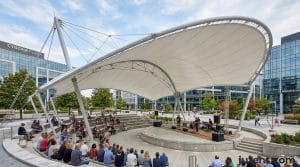
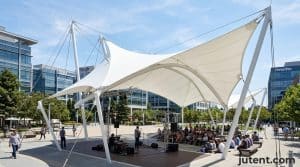
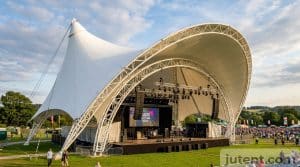
An outdoor stage canopy, at its core, is a specialized architectural structure designed to provide shelter for outdoor performance areas. It typically consists of a steel framework supporting a tensioned membrane fabric. The primary function is weather protection – shielding performers, instruments, and sensitive electronic equipment from rain, direct sunlight, and wind. Unlike temporary event tents, which are often rented and erected for short durations, stage canopies are engineered for long-term or permanent installation, integrating reliable foundations and structural integrity. They are not merely decorative elements; they are functional, safety-critical components of a modern outdoor venue. They are also distinct from fully enclosed buildings, as their design prioritizes open-air acoustics and visibility while maintaining protection.
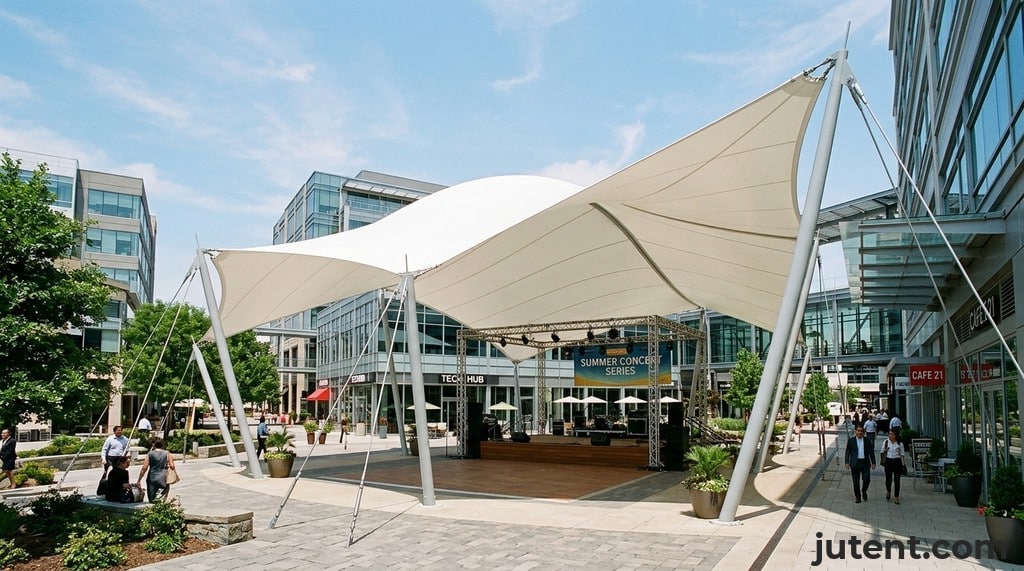
The design of these canopies allows for unobstructed sightlines and optimal sound projection, crucial for any performance space. They are engineered to withstand local wind loads and snow loads, ensuring safety and longevity. For a deeper dive into specific applications, explore our range of Stage Covers.
How Outdoor Stage Canopies Work: Steel, Membrane, and Rigging
The functionality of an outdoor stage canopy hinges on the symbiotic relationship between its three main components: the steel structure, the membrane fabric, and the rigging system. The steel framework, typically constructed from high-grade Q235B or Q355B steel, provides the primary load-bearing support. This steel is treated with durable surface finishes such as epoxy zinc-rich primer with an acrylic or fluorocarbon topcoat, or hot-dip galvanizing, to ensure resistance against corrosion and extend the service life, which can exceed 25-30 years.
The membrane, usually a high-strength PVDF (Polyvinylidene Fluoride) or PTFE (Polytetrafluoroethylene) coated fabric, is tensioned across this steel frame. This tension is critical; it gives the membrane its structural rigidity, allowing it to shed water and resist wind uplift. PVDF membranes typically offer a 10-year warranty and a 15+ year service life, while PTFE membranes boast a 15-year warranty and a 25+ year service life. Standard membrane weight is 1050 g/m². The rigging system, comprising cables, clamps, and connection plates (often SS304 standard, with SS316 as an optional upgrade), is responsible for applying and maintaining this tension. This system also allows for the integration of lighting, sound equipment, and backdrops, making the canopy a versatile performance hub. Based on Jutent's experience across 400+ projects in 30+ countries, proper engineering of these three elements is paramount for both safety and performance.
For more detailed technical specifications and design considerations, refer to our Outdoor Stage Canopy Guide.
Types of Stage Canopies: Tensile, Frame, and Hybrid
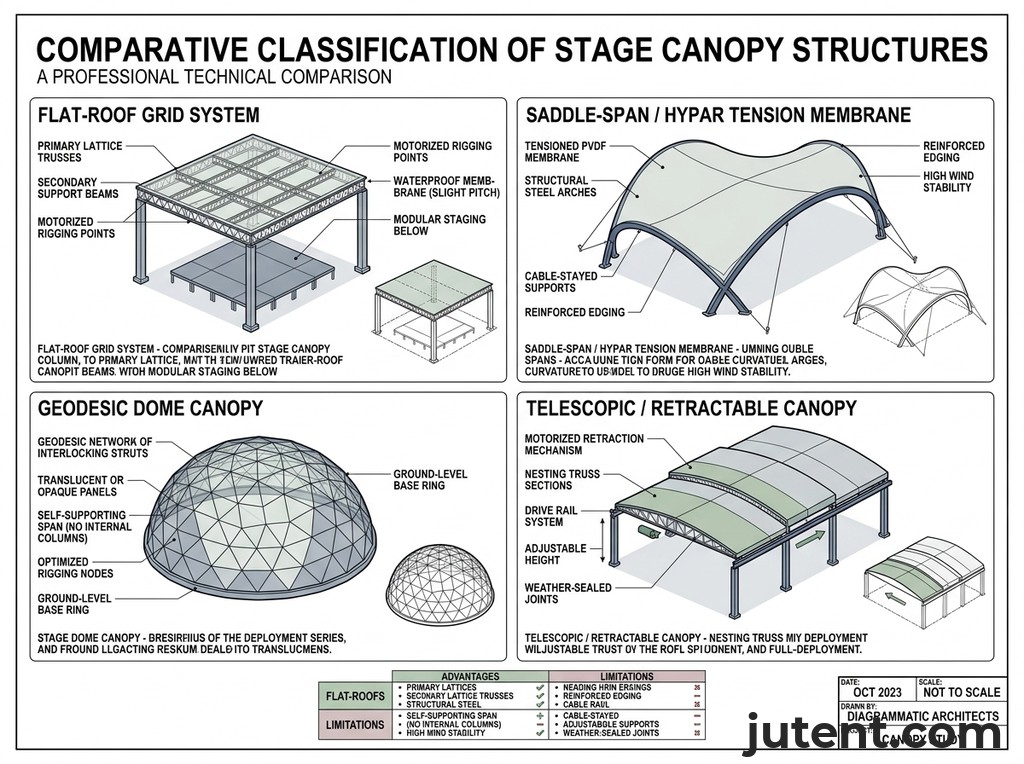
Outdoor stage canopies primarily fall into three categories, each offering distinct aesthetic and functional characteristics:
Tensile Membrane Canopies
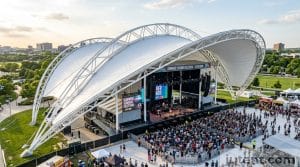
These are the most common and visually striking. They rely on the tensioning of a flexible membrane over a minimal steel framework to create their form. The membrane itself is a structural element, contributing to the canopy's stability. This design allows for organic, flowing shapes and large clear spans, often becoming an architectural statement. They are highly efficient in material use and can be engineered to withstand significant environmental loads.
Frame-Supported Canopies
In contrast, frame-supported canopies utilize a more substantial, rigid steel framework to define the shape, with the membrane acting primarily as a covering. The frame bears the majority of the structural load. These canopies often feature more geometric, rectilinear forms and can be simpler to design and construct for certain applications. They offer excellent stability and can be easily integrated with side walls or enclosures.
Hybrid Canopies
Hybrid designs combine elements of both tensile and frame-supported structures. They might feature a prominent tensile membrane section supported by a more robust, visible frame in specific areas. This approach allows for greater design flexibility, enabling engineers to optimize for both aesthetics and structural efficiency. A hybrid canopy can achieve complex forms while maintaining the structural integrity of a traditional frame, often used when specific functional requirements, such as heavy rigging points, necessitate a more rigid substructure in certain areas.
What an Outdoor Stage Canopy Costs: A Realistic Range
Understanding the cost of an outdoor stage canopy is crucial for project budgeting. Pricing is typically calculated on a per square meter (m²) basis, EXW (Ex Works), and is influenced by factors such as membrane type, structural complexity, and project scope. It's important to note that these are general ranges, and actual costs are subject to specific project designs and material choices.
- Tensile membrane structure (minimal steel): For simpler forms with less steel, expect a range of $30–$50/m². This applies to projects where the membrane plays a more significant structural role.
- PVDF membrane, simple form: For canopies utilizing standard PVDF membrane with straightforward designs, the cost typically falls between $40–$70/m². This is a common choice for many performance venues.
- PVDF membrane, complex form: When intricate shapes, larger spans, or more demanding engineering are required for PVDF membrane structures, the cost can range from $60–$90/m².
- PTFE membrane: Opting for PTFE membrane, known for its superior durability and longevity, adds approximately $20/m² to the equivalent PVDF range. For example, a simple form PTFE canopy would be in the $60–$90/m² range.
These prices are for projects with a minimum scope of 100 m². The overall project warranty is 1 year, covering manufacturing and installation. For export projects, Jutent can provide design drawings, calculations, material specifications, installation manuals, and free remote guidance, subject to project scope and contract terms. On-site supervision is also available as a paid service.
When an Outdoor Stage Canopy Makes Sense for Your Project
Deciding whether an outdoor stage canopy is the right investment for your project involves weighing several factors related to functionality, longevity, and audience experience.
An outdoor stage canopy makes eminent sense when:
- You require permanent or semi-permanent weather protection: Unlike temporary solutions, an engineered canopy provides reliable, long-term shelter from sun, rain, and wind, protecting valuable equipment and ensuring show continuity.
- Your venue hosts regular outdoor performances: For concert halls, amphitheaters, festival grounds, or public parks that frequently feature live acts, a dedicated canopy streamlines operations and enhances the professional image of the venue.
- You prioritize performer and audience comfort: A canopy significantly improves the experience for both performers, by shielding them from harsh sun or sudden downpours, and audiences, by ensuring performances proceed as planned regardless of minor weather shifts.
- You need integrated rigging capabilities: Modern canopies are designed to support lighting rigs, sound systems, and stage backdrops, offering a complete solution for technical production.
- You seek an architectural statement: Tensile membrane structures offer unique, aesthetically pleasing forms that can become iconic landmarks for your venue, enhancing its visual appeal and brand identity.
- You need a low-maintenance solution: With high-quality materials like PVDF or PTFE membranes and properly treated steel, these structures require minimal maintenance over their extensive service life. Typical technical values should always be written conservatively and described as subject to project design.
Investing in an outdoor stage canopy is a strategic decision that enhances the functionality, safety, and appeal of any outdoor performance space, offering a superior alternative to temporary solutions.
FAQ
- Q: How long does an outdoor stage canopy last?
- A: The lifespan of an outdoor stage canopy depends on its components. PVDF membrane, a common choice, has a typical service life of 15–20 years, backed by a 10-year warranty. For the steel structure, which is treated with durable finishes like hot-dip galvanizing or epoxy zinc-rich primer with acrylic or fluorocarbon topcoats, the service life can extend to 25–30 years. PTFE membrane offers an even longer service life of 25+ years with a 15-year warranty.
- Q: Is an outdoor stage canopy suitable for permanent installation?
- A: Yes, absolutely. Tensile stage canopies are specifically designed and engineered as permanent structures. They incorporate reliable foundations, high-grade steel (Q235B, Q355B), and durable membrane materials (1050 g/m² PVDF or PTFE) to ensure stability and longevity. Each project undergoes rigorous structural analysis to meet local building codes and environmental conditions, making them a reliable, long-term asset for any venue.
If you're considering an outdoor stage canopy for a performance venue, send us your project brief for a free consultation.