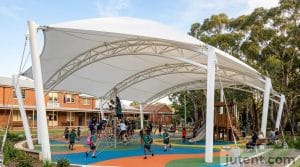

Wind load is the critical structural consideration for playground shade structures — not just for safety, but for council approval. Understanding how wind load is calculated and what standards apply is essential before specifying.
When designing or specifying a playground shade structure, the initial focus often gravitates towards aesthetics, material durability, and UV protection. However, for any structural engineer or contractor, the paramount consideration must be the structure's ability to withstand environmental forces, particularly wind. Neglecting a thorough wind load analysis can lead to catastrophic structural failure, posing significant safety risks to children and staff, and resulting in costly repairs or replacements. Beyond safety, inadequate wind load design is a common reason for project delays or outright rejection during council approval processes. Local authorities rigorously enforce building codes that mandate specific wind resistance capabilities, making precise engineering calculations non-negotiable. A well-engineered tensile structure, like those Jutent provides, is designed from the ground up to distribute these forces effectively, ensuring long-term stability and compliance. This foundational understanding of wind dynamics is what differentiates a compliant, safe, and enduring playground shade from a potential liability. Playground Shade
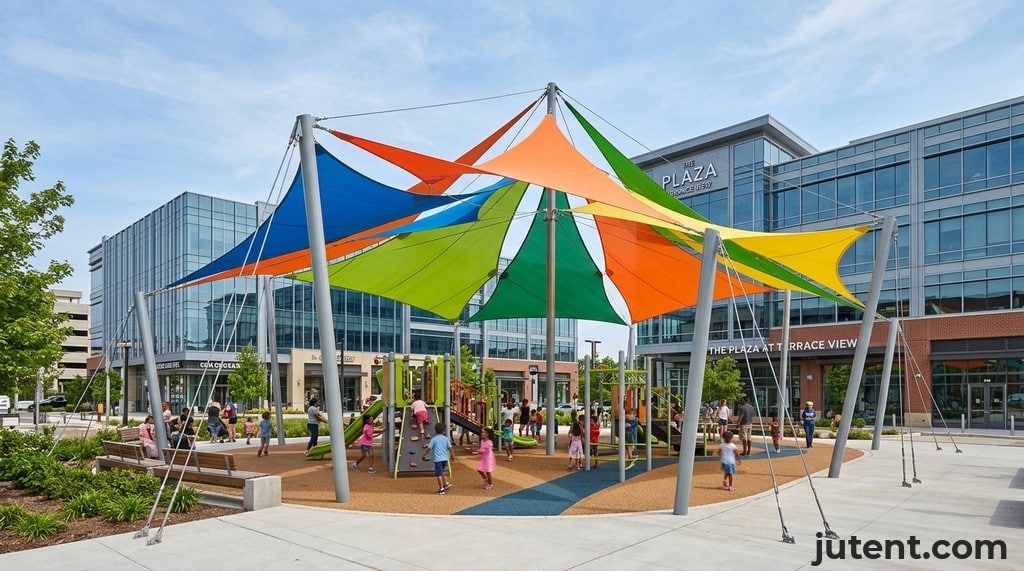
How Wind Load Is Calculated for Playground Shade Structures
Calculating wind load for a playground shade structure involves a multi-faceted approach, integrating geographical data, structural characteristics, and applicable building codes. The fundamental principle is to determine the dynamic pressure exerted by wind on the structure's surface. This pressure is then converted into forces acting on individual structural components.
The general formula for calculating design wind pressure ($P$) is often derived from:
$P = 0.5 \times \rho \times V^2 \times C_d \times C_e \times C_p$
Where:
* $P$ = Design wind pressure (Pascals or psf)
* $\rho$ = Air density (typically 1.225 kg/m³ at standard conditions)
* $V$ = Basic design wind speed (m/s or mph), determined by regional meteorological data and recurrence intervals (e.g., 50-year return period).
* $C_d$ = Drag coefficient, accounting for the shape and orientation of the structure. For tensile membranes, this can be complex due to their aerodynamic forms.
* $C_e$ = Exposure coefficient, reflecting the terrain roughness and height above ground. An open field will have a higher $C_e$ than a suburban area.
* $C_p$ = Pressure coefficient, which varies across different surfaces of the structure (e.g., windward, leeward, roof).
Engineers must also consider factors like gust effects, topographical features (hills, valleys), and the structure's dynamic response to wind (vibration, oscillation). For tensile structures, the membrane's flexibility and interaction with the supporting steel framework (Q235B or Q355B, for example) are critical. Jutent's engineers utilize advanced computational fluid dynamics (CFD) and finite element analysis (FEA) software to model these complex interactions, providing precise wind load distributions for every project. This rigorous approach ensures that the design accounts for both static and dynamic wind effects, guaranteeing the structural integrity of the Playground Shade Structures Guide.
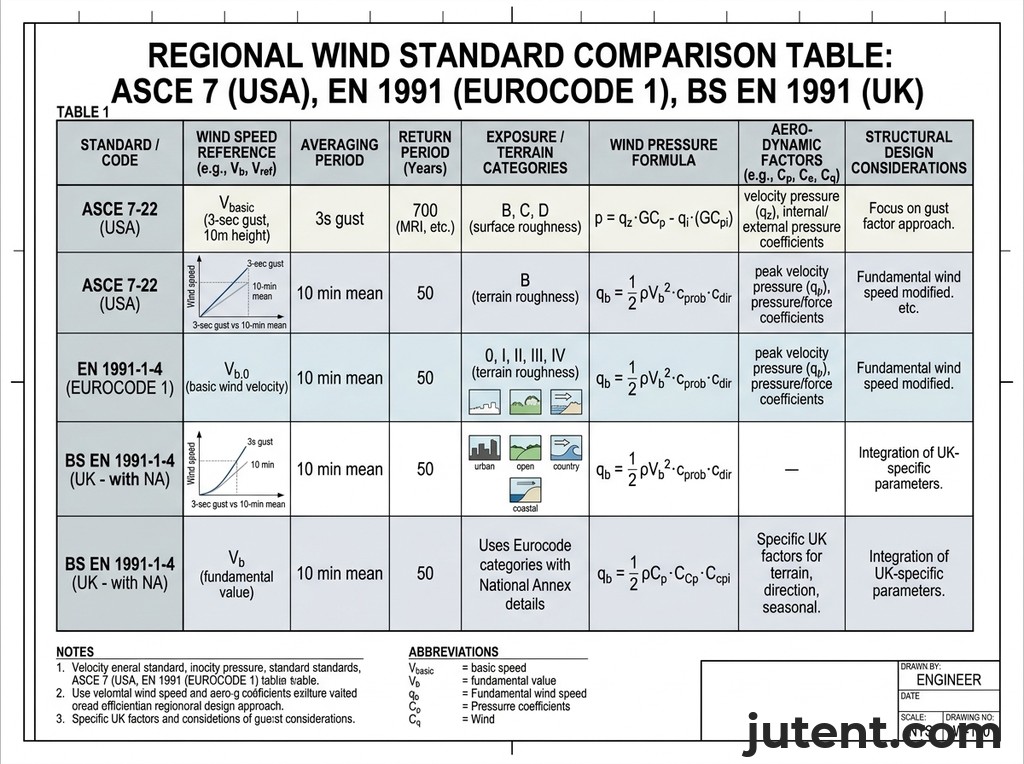
Regional Standards: AS/NZS, NSCP, SBC, and Other Applicable Codes
Adherence to regional building codes and standards is paramount for any construction project, and playground shade structures are no exception. These codes dictate the minimum design wind speeds, load factors, and calculation methodologies specific to a geographical area, ensuring public safety and structural resilience.
For Australia and New Zealand, the primary standard is AS/NZS 1170.2: Structural design actions – Wind actions. This standard provides detailed guidance on determining design wind speeds based on region, terrain category, shielding, and topographic factors. It specifies different return periods for ultimate and serviceability limit states, typically a 500-year return period for ultimate wind loads on critical structures.
In the Philippines, the National Structural Code of the Philippines (NSCP), specifically Volume 1, Chapter 2, Section 207 (Wind Loads), governs wind load calculations. The NSCP references ASCE 7 (Minimum Design Loads for Buildings and Other Structures) and adapts it for local conditions, including specific basic wind speeds for various regions, particularly those prone to typhoons.
The United Arab Emirates (UAE) generally follows the International Building Code (IBC), which often references ASCE 7. The SBC (Saudi Building Code), while specific to Saudi Arabia, also draws heavily from international standards like ASCE 7 for wind load provisions, specifying basic wind speeds and calculation procedures for different risk categories and exposure conditions.
Other regions may adopt their own national codes or variations of international standards:
* Eurocode 1 Part 1-4 (EN 1991-1-4) for European countries.
* Indian Standard IS 875 (Part 3) for India.
* IBC/ASCE 7 for many parts of North America and other countries that adopt international codes.
Based on Jutent's experience across 400+ projects in 30+ countries, we understand the nuances of these diverse codes. Our engineering team is adept at interpreting and applying the correct regional standard, ensuring that every playground shade structure we design is not only structurally sound but also fully compliant with local regulatory requirements. This commitment to code adherence is a cornerstone of our ISO 9001 and SGS certifications.
What Wind Load Data Jutent Provides with Every Playground Project
At Jutent Engineering, transparency and meticulous documentation are integral to our project delivery. For every playground shade structure project, we provide a thorough suite of wind load data and engineering documentation, empowering structural engineers and contractors with the necessary information for verification, integration, and council submission.
Our standard wind load data package includes:
1. Basic Design Wind Speed (V): Clearly stating the specific wind speed (e.g., in m/s or km/h) used for the design, derived from the project's geographical location and applicable regional standards (e.g., AS/NZS 1170.2, NSCP, SBC).
2. Wind Pressure Calculations: Detailed calculations showing how the basic wind speed is translated into design wind pressures on various surfaces of the membrane and steel structure, including consideration of exposure categories, topographic factors, and shielding effects.
3. Load Combinations: Presentation of the critical load combinations, incorporating wind loads with dead loads, live loads, and other environmental factors as per the relevant building codes.
4. Structural Analysis Reports: Outputs from our advanced FEA software, illustrating stress distributions, deflections, and reactions on all structural components (steel framework, membrane, connections, and foundations) under design wind conditions. This includes analysis for both ultimate limit state (ULS) and serviceability limit state (SLS).
5. Material Specifications: Confirmation of the steel grades (Q235B, Q355B) and membrane type (1050 g/m² PVDF or PTFE) used, along with their respective strength properties, ensuring they meet or exceed design requirements. Our steel is treated with epoxy zinc-rich primer + acrylic topcoat or fluorocarbon topcoat, or hot-dip galvanizing for superior corrosion resistance.
6. Connection Details: Engineering drawings detailing all critical connections, anchorage points, and foundation requirements, specifying how wind forces are transferred through the structure to the ground.
For export projects, Jutent can provide design drawings, calculations, material specifications, installation manuals, and free remote guidance, subject to project scope and contract terms. This thorough documentation ensures that our clients have a complete understanding of the structural integrity and wind resistance capabilities of their Jutent playground shade structure.
FAQ
- Q: What wind speed should a playground shade structure be designed for?
- A: Design wind speed depends on location and applicable building codes. For example, in the Philippines, structures are typically designed for basic wind speeds ranging from 200–250 km/h (as per NSCP, considering typhoon zones). In the UAE, design wind speeds often fall between 45–55 m/s (following SBC or IBC/ASCE 7 guidelines). For Australia and New Zealand, AS/NZS 1170.2 specifies ultimate limit state design wind speeds ranging from 41–66 m/s, depending on the wind region and terrain category. Typical technical values should always be written conservatively and described as subject to project design. Jutent's engineers determine the precise design wind speed based on the project's specific geographical coordinates and local regulations.
- Q: Does Jutent provide stamped wind load calculations for council submission?
- A: Jutent provides detailed engineering calculations and reports for all our projects, which form the basis of the structural design and demonstrate compliance with relevant wind load standards. For projects requiring official council submission where a locally registered engineer's stamp is mandatory, we work collaboratively with local registered engineers appointed by the client or through our network. These local engineers review our calculations and design, and if satisfactory, they provide the necessary stamping for council approval. This process ensures both the integrity of our design and adherence to local regulatory requirements.
Tell us your project location and we'll provide wind load calculations specific to your region.