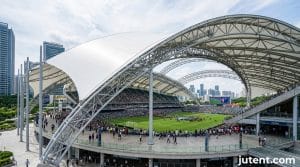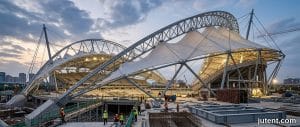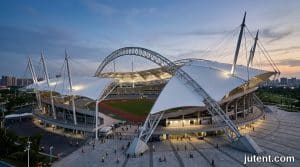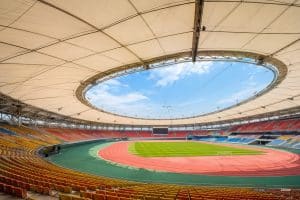

Procuring a grandstand canopy from an overseas manufacturer involves more steps than a standard shade structure order. This checklist covers everything from RFQ to delivery — so nothing falls through the cracks.
Step 1: Define the Scope — What Information You Need Before Sending an RFQ
Before initiating any grandstand canopy procurement, a precise definition of project scope is paramount. This initial phase dictates the accuracy of subsequent quotations and mitigates potential misunderstandings. Begin by gathering all available architectural drawings, site plans, and any existing structural analyses. Key data points include the grandstand's dimensions (length, width, height), seating capacity, and desired coverage area. Consider the local climatic conditions, specifically wind speed and snow load requirements, as these directly impact the structural design and material specifications. A clear understanding of the intended use – whether for sports, concerts, or multi-purpose events – will also influence design considerations such as sightlines and acoustic properties.
Specify the preferred membrane material (PVDF or PTFE) and its desired lifespan, keeping in mind that PVDF offers a 10-year warranty and 15+ years service life, while PTFE provides a 15-year warranty and 25+ years service life. Detail any aesthetic preferences, such as membrane color or structural finish (e.g., hot-dip galvanizing, epoxy zinc-rich primer + fluorocarbon topcoat). Outline your project timeline, including critical milestones for design approval, fabrication, shipment, and installation. This thorough preliminary information forms the foundation for a reliable Request for Quotation (RFQ) and ensures that potential suppliers can provide accurate and relevant proposals.
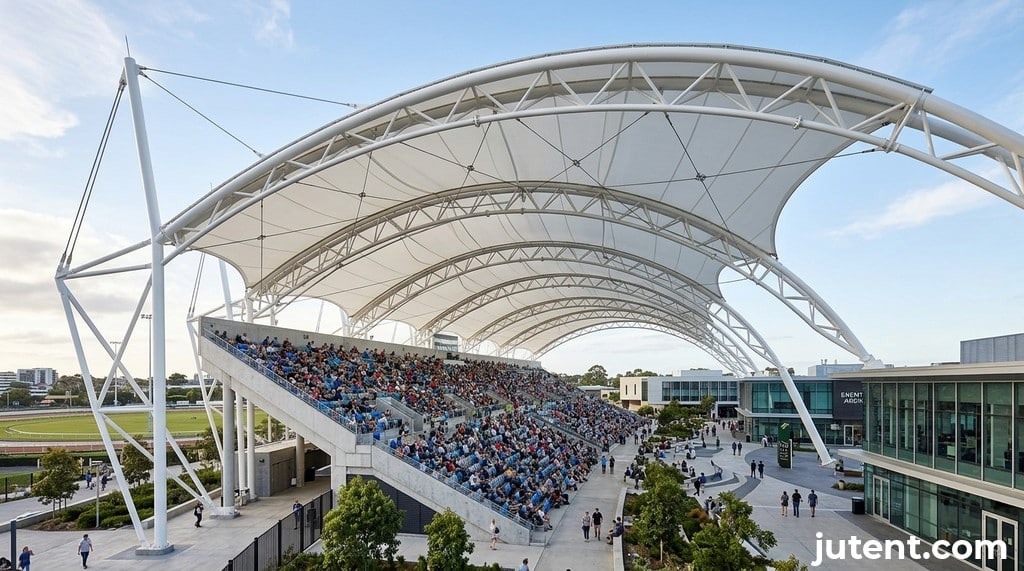
Step 2: Evaluate Suppliers — What to Ask and What to Look For
Supplier evaluation is a critical phase in grandstand shade structure sourcing, requiring thorough due diligence beyond just price comparison. Begin by verifying the manufacturer's experience with similar large-scale tensile structures. Ask for a portfolio of grandstand canopy projects, specifically those completed for international clients. Inquire about their engineering capabilities: Do they have in-house structural engineers? Can they provide detailed design calculations compliant with international standards (e.g., ASCE 7, Eurocode)? Request copies of their quality certifications, such as ISO 9001, which demonstrates a commitment to quality management systems.
Investigate their manufacturing processes. What steel grades do they typically use (e.g., Q235B, Q355B)? How do they ensure quality control for steel fabrication and membrane welding? Ask about their surface treatment methods – approved options include hot-dip galvanizing or epoxy zinc-rich primer + acrylic/fluorocarbon topcoat. Request references from previous international clients to gain insights into their reliability, communication, and project delivery. A reputable manufacturer should be transparent about their facilities and processes. Based on Jutent's experience across 400+ projects in 30+ countries, a site visit or a detailed virtual tour of the factory can provide invaluable insights into their operational capacity and quality standards.
About
Step 3: Review the Quotation — What Should and Shouldn't Be Included
A thorough quotation for grandstand canopy procurement should be more than just a price list; it's a detailed proposal outlining the scope of work and associated costs. Ensure the quotation explicitly details the membrane material (e.g., 1050 g/m² PVDF or PTFE), its thickness, and expected lifespan. It must specify the steel grade, surface treatment (e.g., hot-dip galvanizing, epoxy zinc-rich primer + fluorocarbon topcoat), and any stainless steel components (e.g., SS304 standard, SS316 optional upgrade). The pricing should be clearly broken down, typically presented as an EXW (Ex Works) price per square meter, with separate line items for design, fabrication, packing, and any included accessories. For tensile membrane structures with minimal steel, expect $30–$50/m². For PVDF membrane, simple forms might range from $40–$70/m², while complex forms could be $60–$90/m². PTFE membrane typically adds approximately $20/m² to the PVDF range. Remember, the minimum project scope is 100 m².
The quotation should also include estimated shipping costs (FOB, CIF, or DDP, depending on your preference), and clearly state any exclusions, such as import duties, local taxes, or on-site installation services (though remote guidance is often free, and on-site supervision is available as a paid service). Crucially, it should define the warranty terms: a 1-year overall project warranty, 10 years for PVDF membrane, and 15 years for PTFE membrane. Any reputable quotation will also include a preliminary project schedule. Be wary of quotations that are overly simplistic, lack detailed material specifications, or omit warranty information.
Step 4: Confirm the Order — Documentation and Payment Terms
Confirming a grandstand canopy order requires meticulous attention to contractual details and payment arrangements. Before signing, ensure the contract explicitly incorporates all agreed-upon specifications from the RFQ and quotation, including material grades, dimensions, surface treatments, and warranty terms. The contract should outline the responsibilities of both parties, including design approvals, manufacturing milestones, quality control checks, and delivery schedules. It must also detail the documentation the manufacturer will provide, such as engineering drawings, wind load calculations, material certificates, and installation guides. For export projects, Jutent can provide design drawings, calculations, material specifications, installation manuals, and free remote guidance, subject to project scope and contract terms.
Payment terms are a critical aspect of overseas grandstand canopy procurement. Standard terms for orders from China typically involve a 30–50% deposit upon order confirmation, with the balance due before shipment. For repeat clients with established relationships, extended terms may be available. Ensure the payment schedule is clearly linked to project milestones, providing a level of security. Review the force majeure clauses, dispute resolution mechanisms, and intellectual property rights related to the design. A well-structured contract protects both parties and provides a clear framework for the entire project lifecycle.
Step 5: Monitor Production — What to Check Before Shipment
Effective monitoring during the production phase is essential to ensure the grandstand canopy meets all specified requirements before it leaves the factory. Request a detailed production schedule from the manufacturer, including key checkpoints for material procurement, steel fabrication, membrane cutting and welding, and surface treatment. Implement a system for regular progress updates, which could include photos or video calls. During steel fabrication, verify that the correct steel grades (e.g., Q235B, Q355B) are being used and that welding procedures adhere to international standards. Inspect the surface treatment application – whether it's hot-dip galvanizing or the specified epoxy zinc-rich primer + fluorocarbon topcoat – to ensure proper coverage and thickness.
For the membrane, request test certificates for the PVDF or PTFE material, confirming its tensile strength, tear resistance, and fire rating. Verify that the membrane cutting and welding are precise and free from defects. If possible, arrange for a third-party inspection at critical stages, particularly before final assembly and packing. This independent verification adds an extra layer of quality assurance. Ensure all components are clearly marked and organized according to the packing list. Any discrepancies or quality issues identified at this stage are far easier and less costly to rectify than after shipment and arrival on site.
Step 6: Receive and Inspect — What to Verify on Arrival
Upon arrival of your grandstand canopy shipment, a thorough receiving and inspection process is crucial to confirm that all components are present, undamaged, and meet the agreed-upon specifications. Begin by cross-referencing the received goods against the packing list provided by the manufacturer. Document any discrepancies immediately. Visually inspect all crates and packages for signs of transit damage. If damage is observed, photograph it extensively before opening and note it on the delivery receipt.
Once unpacked, conduct a detailed inspection of the steel structure components. Verify the dimensions, check for any deformation, and confirm the integrity of the surface treatment. Even with approved methods like hot-dip galvanizing or epoxy zinc-rich primer + acrylic topcoat, minor scuffs can occur during transit. Inspect the membrane panels for any tears, punctures, or manufacturing defects that may have been missed during pre-shipment checks. Ensure all connection hardware (e.g., SS304 standard, SS316 optional upgrade) and accessories are accounted for. Compare material certificates and other documentation against the physical components. Any significant deviations or damage should be reported to the manufacturer and freight forwarder promptly, supported by photographic evidence, to facilitate claims or resolutions. This final inspection safeguards your investment and ensures a smooth installation process.
FAQ
- What documents should a grandstand canopy manufacturer provide with an order?
- A reputable grandstand canopy manufacturer should provide a thorough set of documents to ensure project success and compliance. These typically include detailed engineering drawings for fabrication and assembly, wind load calculations specific to the project's location, membrane test certificates verifying material properties, steel material certificates confirming grade and quality, a precise packing list for shipment verification, and a clear installation guide. Jutent provides all of these as standard, ensuring transparency and support throughout the project lifecycle.
- What payment terms are typical for a grandstand canopy order from China?
- For grandstand canopy orders from China, standard payment terms usually involve an initial deposit of 30–50% of the total project cost upon order confirmation. This deposit secures materials and initiates the manufacturing process. The remaining balance is then typically due before shipment, once production is complete and quality checks have been performed. For repeat clients with a proven track record, manufacturers like Jutent may offer more flexible or extended payment terms, fostering long-term partnerships.
Contact Jutent with your grandstand project details and we'll guide you through every step of the procurement process.