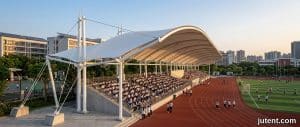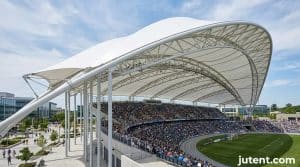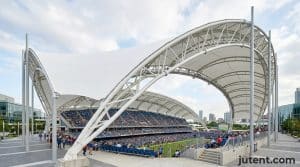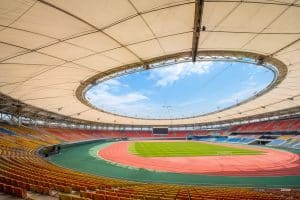

为体育场项目指定PTFE张拉膜结构或PVDF替代方案时,承包商通常会在四个方面做出错误决定:使用寿命预期、防火等级合规性、自洁性能要求和预算分配。PTFE和PVDF膜结构都适用于看台遮阳棚,但在20年的使用寿命中,它们的性能表现截然不同。本对比涵盖防火等级、自洁性能、抗紫外线性能以及大型项目中至关重要的成本差异。
What PTFE and PVDF Membranes Are (and What They're Not)
PTFE and PVDF are the two dominant materials for a membrane grade grandstand. They are not interchangeable, and substituting one for the other post-design will force a complete structural recalculation.
PTFE (Polytetrafluoroethylene) is a woven fiberglass base cloth coated with Teflon. It is highly durable, chemically inert, and completely non-combustible. A standard PTFE membrane for stadium use typically weighs between 1100g/㎡ and 1300g/㎡. It is not a flexible fabric; it requires careful handling during installation to avoid creasing or fracturing the internal fiberglass yarns, which can compromise the material's structural integrity.
PVDF (Polyvinylidene fluoride) is a woven polyester base cloth coated with a fluorocarbon polymer. It is flexible, easier to tension, and highly weldable. For a Grandstand Canopy, high-grade PVDF typically weighs between 900g/㎡ and 1050g/㎡. It is not a temporary tarp; architectural-grade PVDF is a structural material designed for permanent tension and engineered to withstand severe weather events.
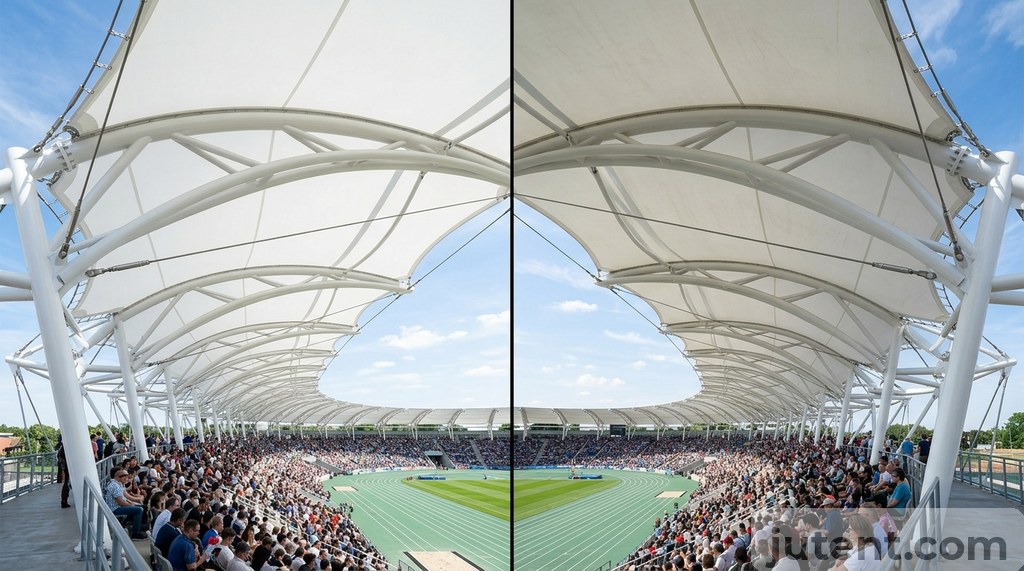
The choice between a PTFE vs PVDF grandstand dictates the structural steel sizing, the installation methodology, and the long-term maintenance schedule. Contractors must align the membrane specification with the project's design life and local building codes before engineering the primary steelwork.
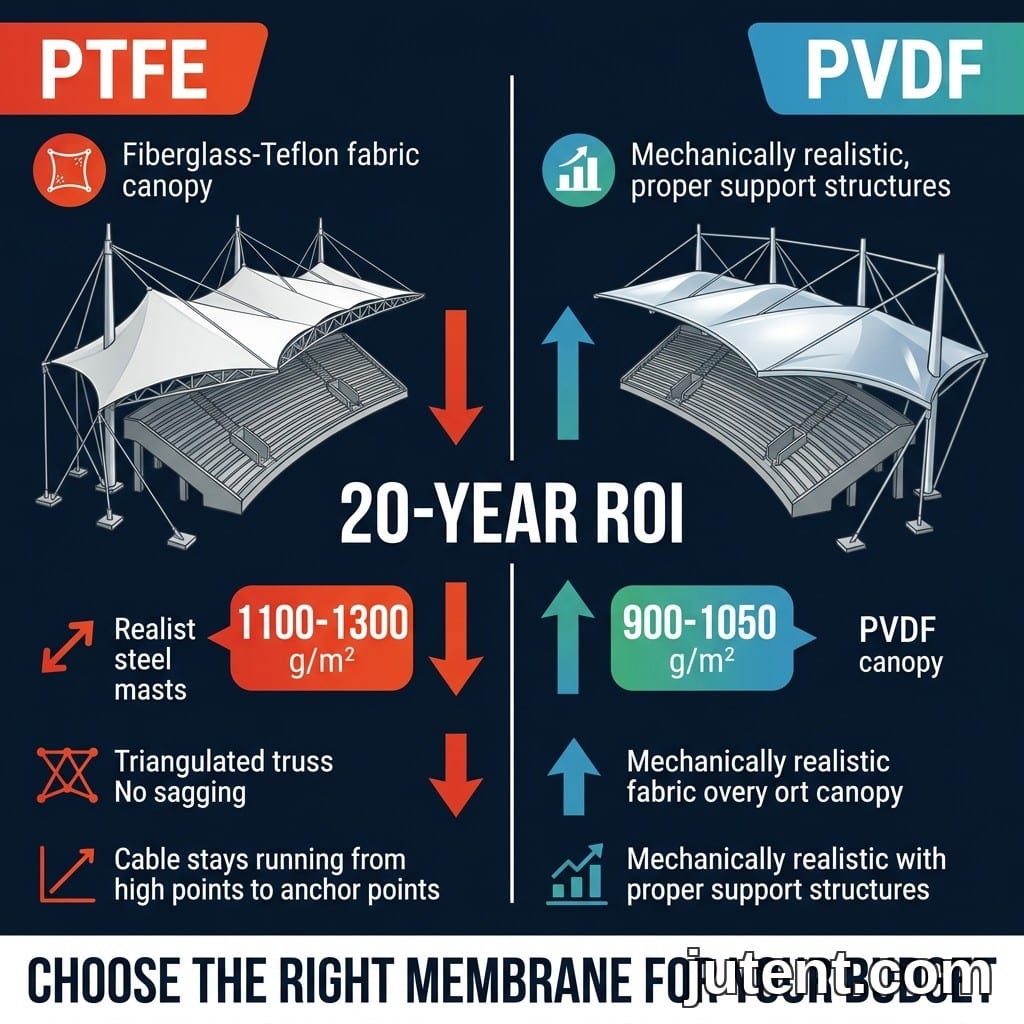
Lifespan Comparison: 15-Year PVDF vs 25-Year PTFE in Grandstand Applications
PTFE outlasts PVDF by a decade or more. A grandstand roof tensile membrane made of PTFE carries a design life of 25 to 30 years, often exceeding 35 years in moderate climates without requiring replacement. PVDF offers a reliable 15 to 20-year lifespan, depending heavily on the topcoat thickness and environmental exposure.
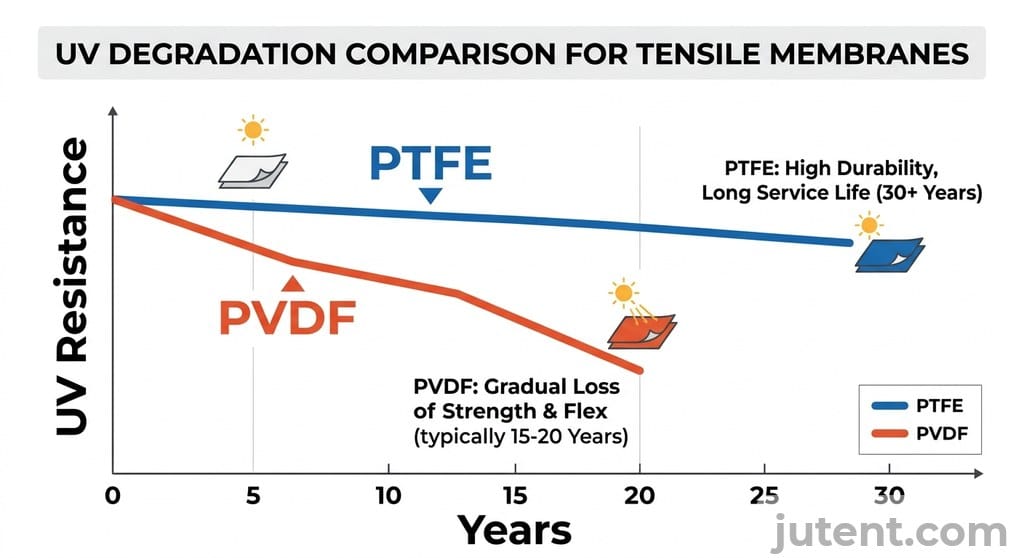
The difference lies in material degradation mechanics. Fiberglass does not degrade under UV exposure, and the Teflon coating remains chemically stable regardless of humidity or temperature fluctuations. A 1200g/㎡ PTFE membrane retains over 85% of its original tensile strength after 20 years in the field. Polyester, the base of PVDF, eventually loses strength as plasticizers migrate and the protective coating thins over time.
Across 420+ projects in 30+ countries, the specification error we see most often in tropical climates is selecting 950g/㎡ PVDF instead of 1050g/㎡ to reduce cost. The price difference is approximately $3–5/㎡. The lifespan difference is 5–8 years. The math does not support the saving. For a detailed breakdown of material properties, 请查看我们的PTFE与PVDF膜结构详细对比指南.
Fire Rating: What Large Grandstand Projects Typically Require
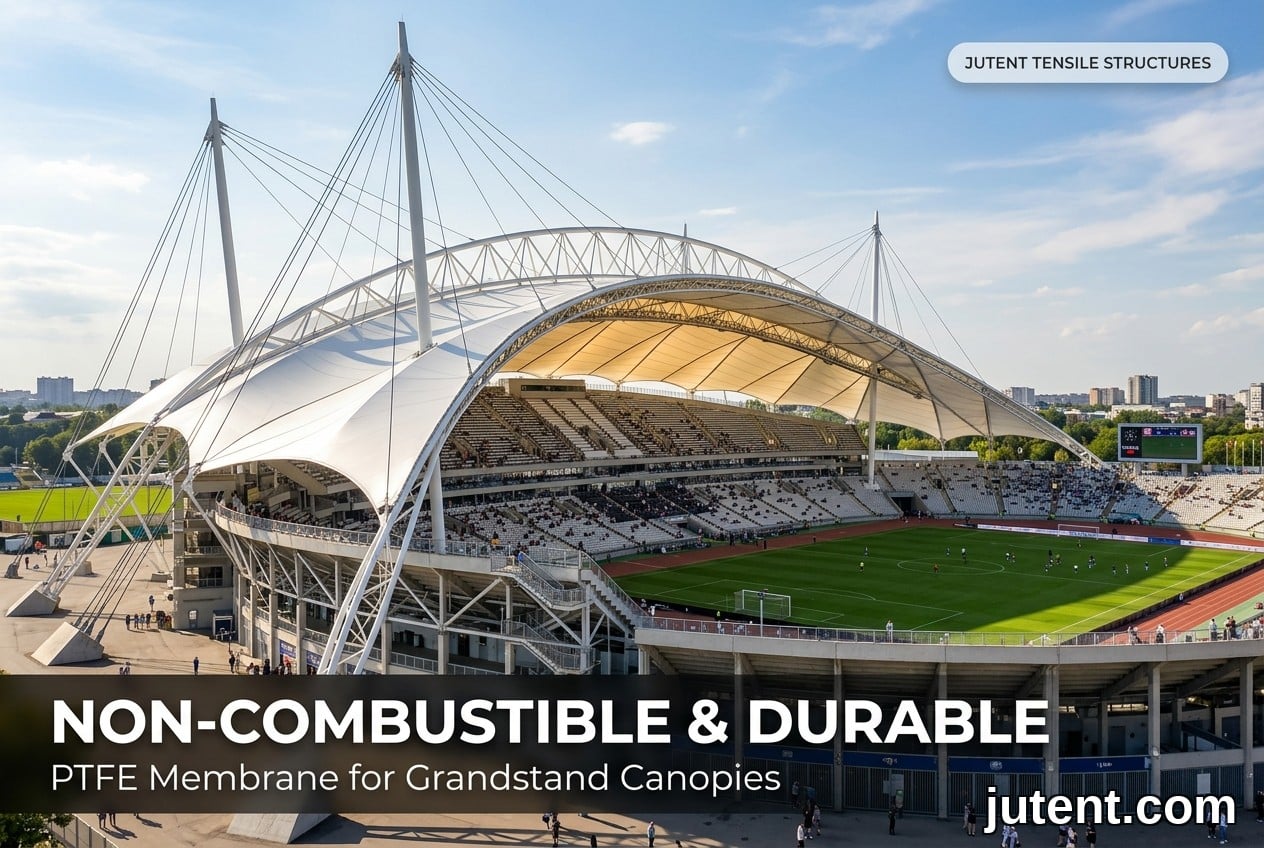
Fire compliance dictates membrane selection for high-capacity stadiums. PTFE is non-combustible. PVDF is flame-retardant. Understanding this distinction is critical for passing municipal building inspections.
PTFE achieves the highest possible fire ratings for architectural fabrics. Because its base cloth is woven fiberglass, it does not burn, melt, or produce toxic smoke under extreme heat. It routinely meets ASTM E136, EN 13501-1 Class A2-s1,d0, and BS 476 Part 6 & 7 Class 0. This makes it the mandatory choice for enclosed or semi-enclosed arenas where evacuation times exceed 15 minutes and strict non-combustibility is required by law.
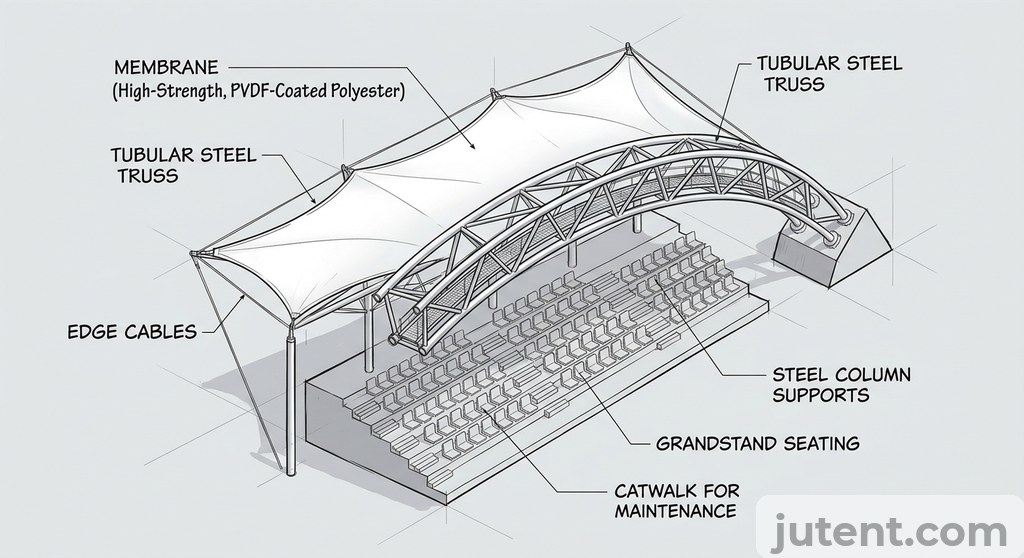
PVDF relies on chemical additives in the PVC coating to resist ignition. When exposed to direct flame, it will melt and self-extinguish once the heat source is removed, but it will produce smoke during the process. High-grade PVDF meets EN 13501-1 Class B-s2,d0, NFPA 701 Test 1 & 2, and BS 476 Part 7 Class 1. This is entirely sufficient for open-air grandstands, municipal sports parks, and school bleachers.
Cost Comparison: PTFE vs PVDF for Grandstand Canopies
PTFE is more expensive upfront. The total installed cost difference is significant enough to influence the project budget, but the lifecycle cost often favors PTFE for permanent stadium structures.
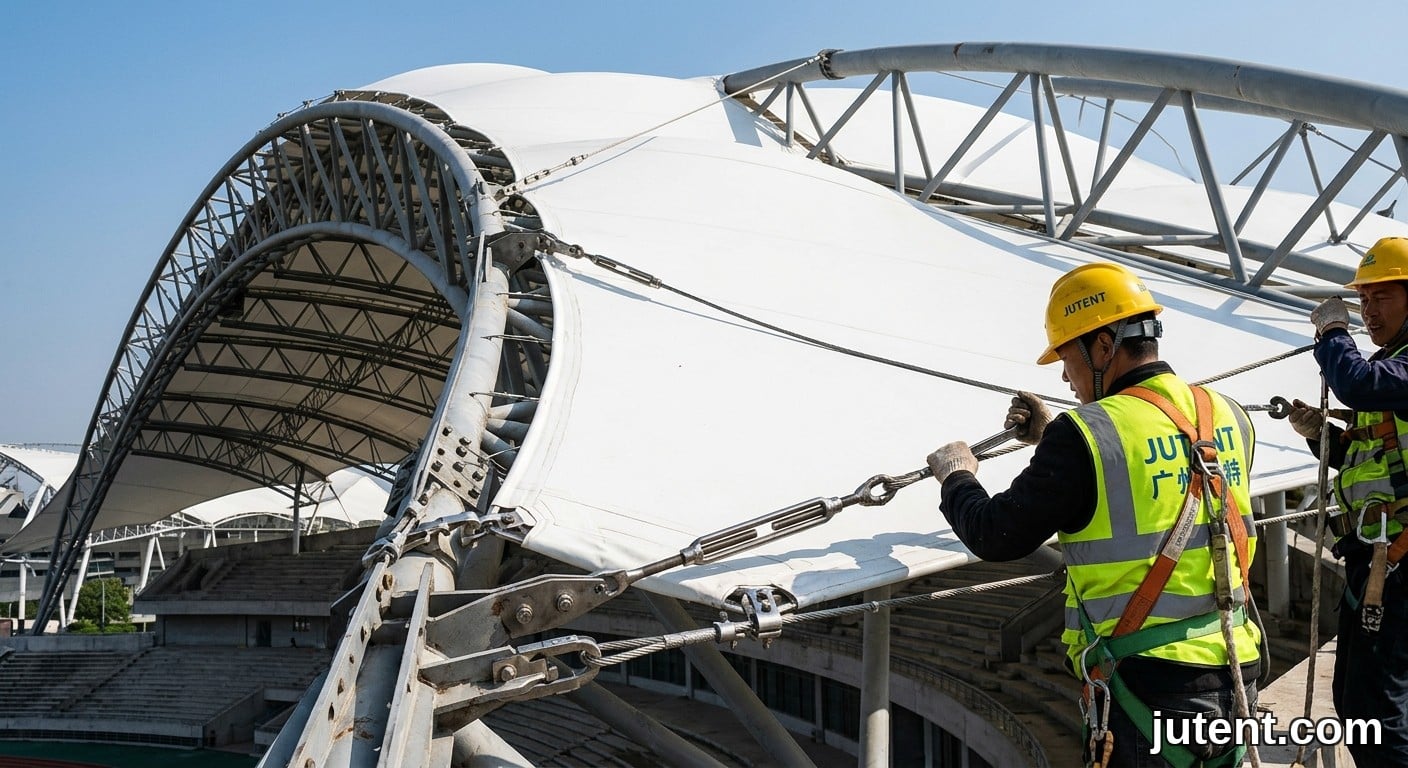
PVDF membrane material costs range between $35 and $60 per square meter, depending on the grade, topcoat thickness, and warranty period. PTFE typically commands a 50% to 100% premium over high-grade PVDF, depending on the specific grade and quantity, generally ranging from $75 to $110 per square meter.
The total installed cost includes the membrane, structural steel, cables, and installation labor. For a typical 2,000㎡ grandstand canopy, the installed cost difference between PVDF and PTFE is approximately $80,000 to $120,000. Over a 25-year design life, PTFE requires no replacement. PVDF may require one replacement at year 15, which eliminates the upfront savings.
Installation Considerations: PTFE vs PVDF for Grandstand Projects
PTFE requires specialized crews, strict weather windows, and cannot be folded. PVDF is more forgiving, can be folded for shipping, and welded on-site. This directly impacts your project timeline and site labor costs. For a detailed breakdown of installation steps, see our guide on how to install a tensile membrane structure.
FAQ: PTFE vs PVDF Grandstand Canopies
- How does the installation process differ between PTFE and PVDF grandstand canopies?
- PTFE requires specialized crews, strict weather windows, and cannot be folded. PVDF is more forgiving, can be folded for shipping, and welded on-site. This directly impacts your project timeline and site labor costs.
- What is the total installed cost difference for a grandstand canopy project?
- For a typical 2,000㎡ grandstand canopy, the installed cost difference between PVDF and PTFE is approximately $80,000 to $120,000. Over a 25-year design life, PTFE requires no replacement, while PVDF may need one replacement at year 15.
- Can a PVDF grandstand canopy be retrofitted with a PTFE membrane later?
- Retrofitting a PVDF grandstand canopy with PTFE is generally not recommended without structural reassessment. PTFE is heavier and has different tension requirements, so the existing steelwork may need reinforcement.
- Which membrane is better for coastal or high-humidity environments?
- PTFE is chemically inert and performs exceptionally well in coastal environments. PVDF with a high-grade topcoat also performs well, but may require more frequent cleaning in salt-laden air.