
“`html
Specifying a tensile canopy for a recreational facility involves three decisions that most architects and contractors get wrong the first time: selecting the right structural form, managing water runoff, and balancing clear spans against steel tonnage. Choosing the right sail shade structure, cone, or cantilever form for a sports court affects drainage, wind performance, and cost — not just aesthetics. This guide covers each configuration, providing the dimensional and load data required to get the specification right before going to tender.
Sports Court Canopy Forms: Sail, Cone, and Cantilever for Padel, Tennis, and Pickleball
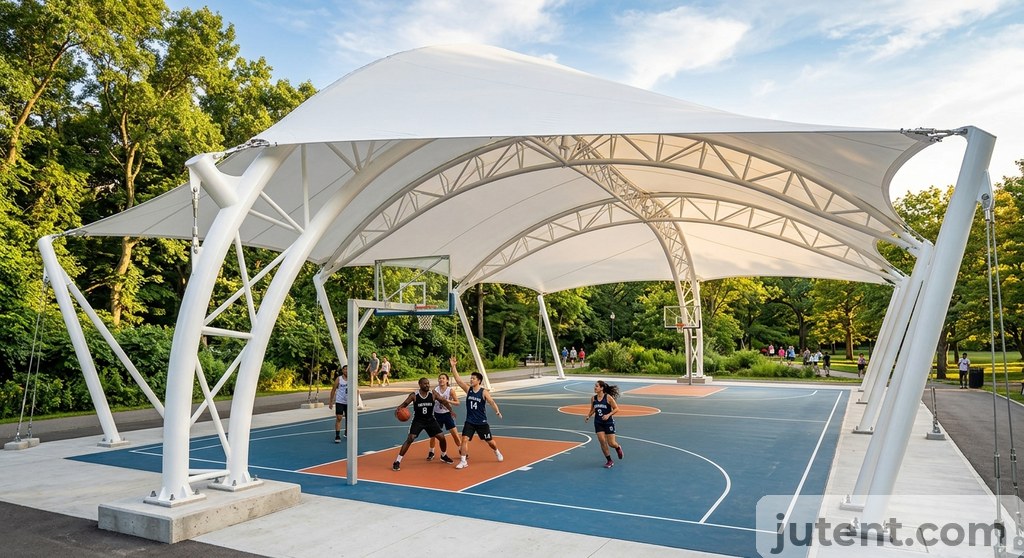
A tensile membrane canopy design relies on curvature to carry loads. For sports facilities, this curvature is typically achieved through three primary configurations: sail shades, cone (or hypar) forms, and cantilever structures. The selection dictates the steel weight, foundation size, and the required membrane pre-stress.
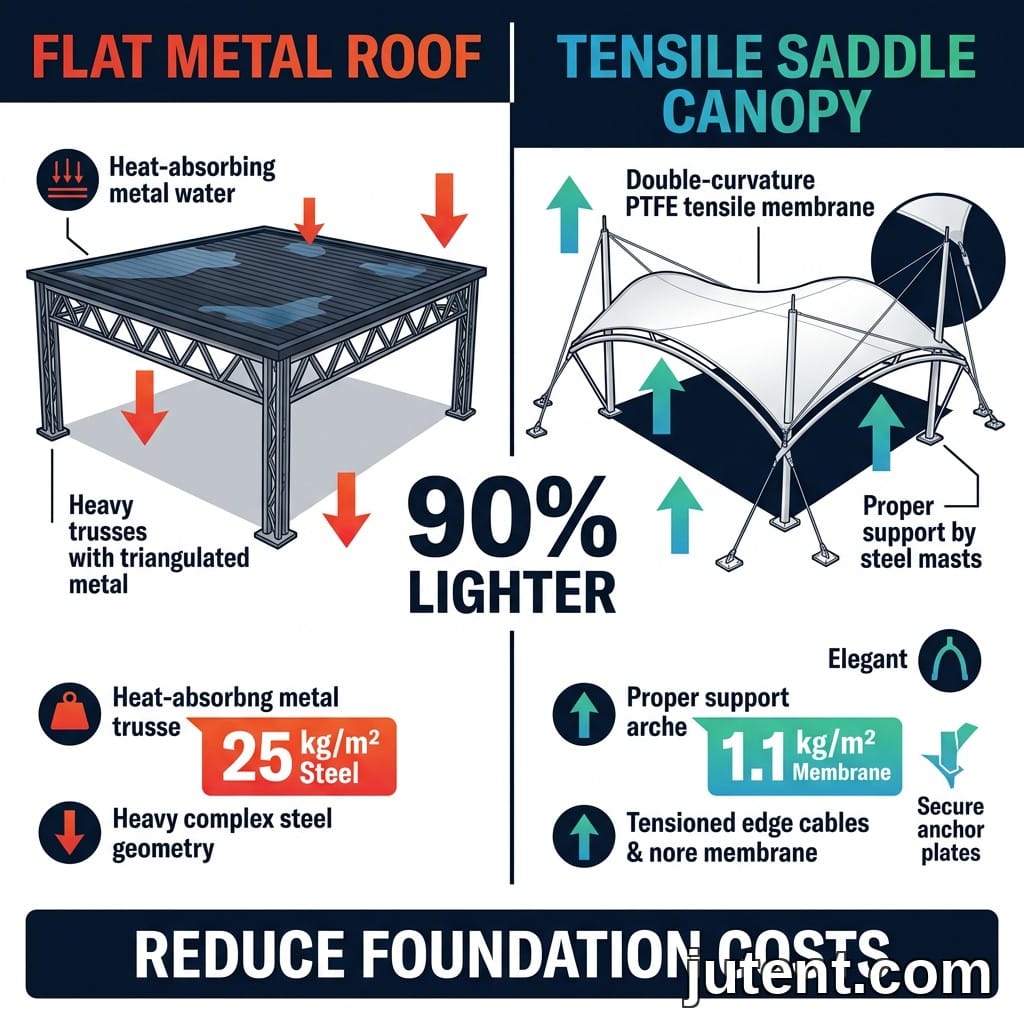
A flat or low-pitch roof requires heavy steel trusses to resist deflection. Tensile structures use the membrane itself as a structural element. By introducing double curvature—where the fabric curves in two opposing directions—the membrane can span distances of 20 to 40 meters with minimal supporting steel.
The choice of form directly impacts the playing environment. A standard tennis court requires a minimum clearance height of 9.14 meters (30 feet) over the entire court for competitive play per ITF regulations. Recreational courts may use lower clearances, but 9.14m is the safe specification for multi-use facilities. A Sport Court Shade must accommodate these vertical clearances while keeping columns outside the run-off zones. This requirement immediately eliminates certain low-profile designs and forces the specification toward forms that elevate the structural steel away from the playing surface.
Sail Shade Structure: When It Works and When It Doesn't
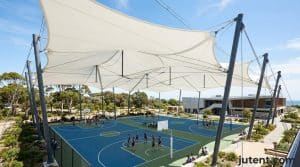
A sail shade structure provides highly effective coverage for smaller recreational areas, seating zones, or partial court layouts, but it presents distinct engineering limitations for full-size competitive sports courts. The primary constraint involves tension distribution over large spans.
In a typical shade sail sports court application, the membrane is tensioned between independent perimeter columns. To maintain structural stability under dynamic wind loads, the fabric requires significant pre-stress. As the clear span increases beyond 15 meters, the tension loads transferred to the corner columns increase exponentially. This geometric reality requires massive concrete foundations and heavy-wall steel pipes—often exceeding 250mm in diameter—to resist the resulting bending moments.
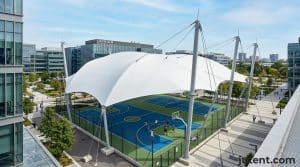
Independent sails also inherently leave gaps in coverage. While acceptable for a casual playground or park setting, a multi-court tennis or basketball facility requires continuous weather protection to maintain playing conditions. If the project demands 100 percent rain protection over a standard 36m × 18m court footprint, a single continuous membrane supported by a rigid perimeter frame proves structurally more efficient than multiple overlapping sails. For a deeper dive into sizing these systems, refer to our See our Padel Court Canopy Design Guide for detailed sizing tables.
Cone and Hypar Forms: Drainage Advantages and Structural Efficiency
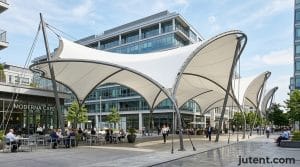
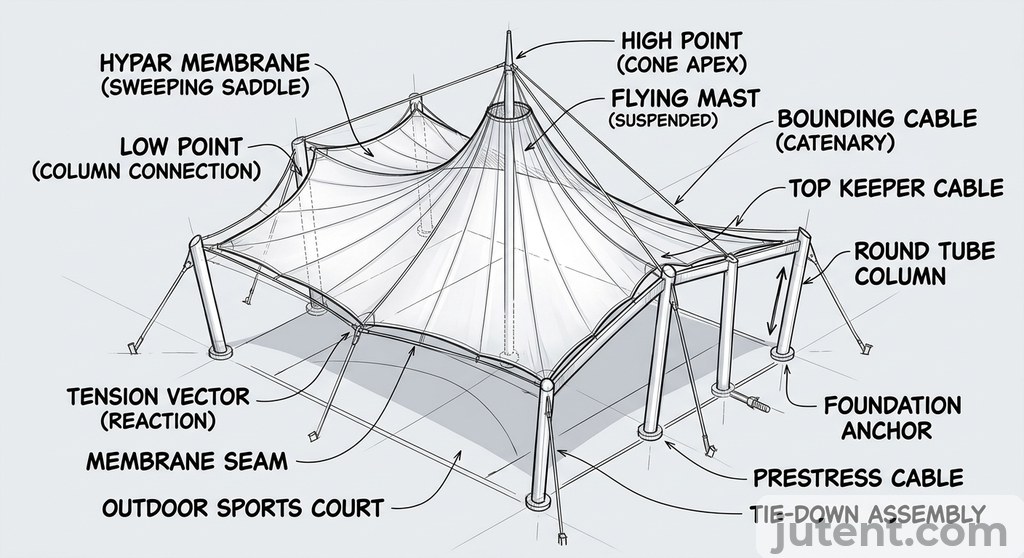
A cone shade structure and its geometric relative, the hyperbolic paraboloid (hypar), offer the highest structural efficiency of any tensile canopy form. By utilizing a central mast or alternating high and low perimeter connection points, these forms create aggressive double curvature.
This curvature solves the most common failure point in membrane structures: water ponding. A properly tensioned cone form with a minimum pitch of 15 degrees sheds water instantly. The radial tension lines distribute wind and snow loads evenly across the membrane surface, transferring forces efficiently to the supporting steel.
Similar specification issues often appear when early-stage assumptions are made before the engineering conditions are confirmed.
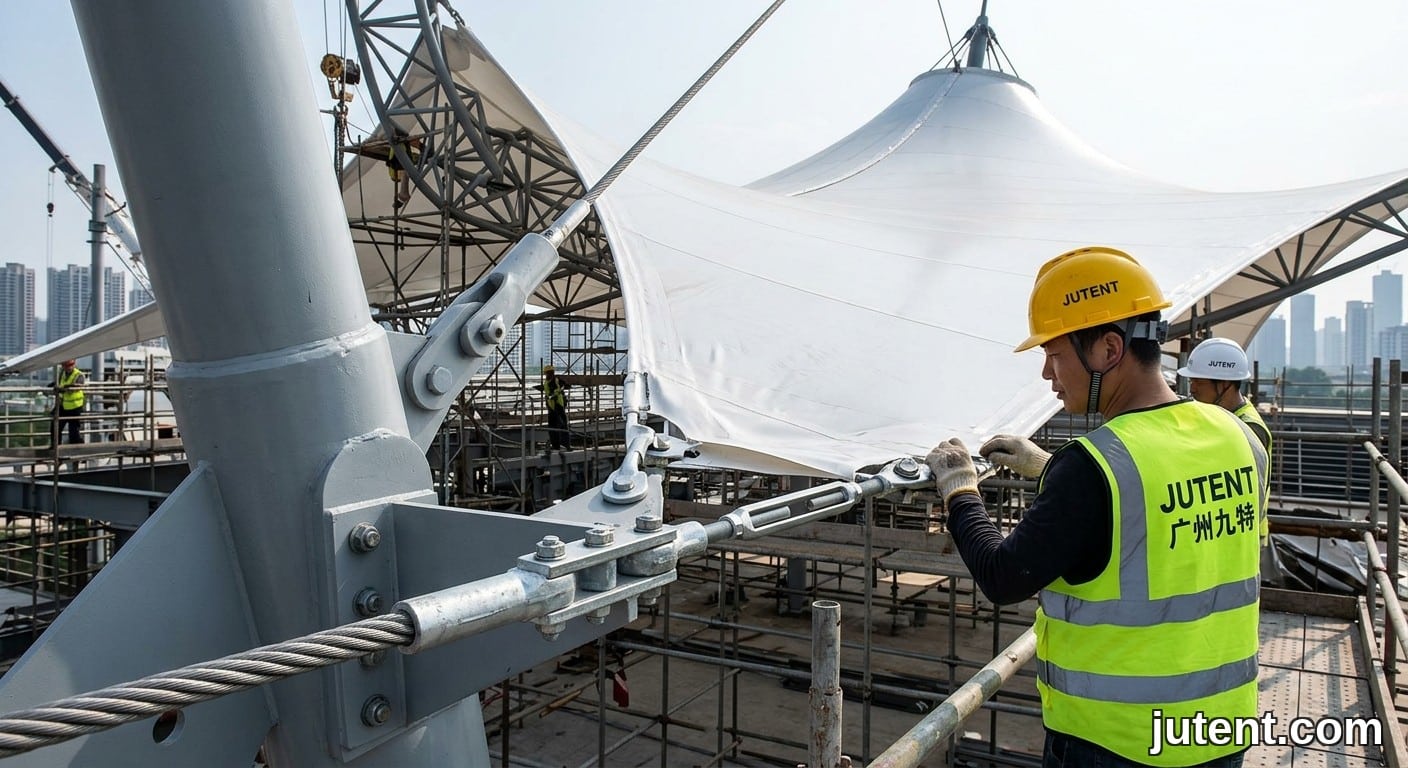
Typical specifications use Q235B or Q355B steel, 1050 g/㎡ PVDF or PTFE membrane as standard, and SS304 stainless accessories, with higher grades available when the project requires them.
Cantilever Shade Structure: Maximum Clear Span Without Mid-Court Columns
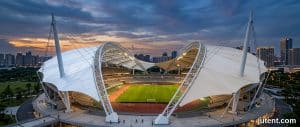
A cantilever shade structure is the definitive solution when sightlines and unobstructed movement are the primary project constrain
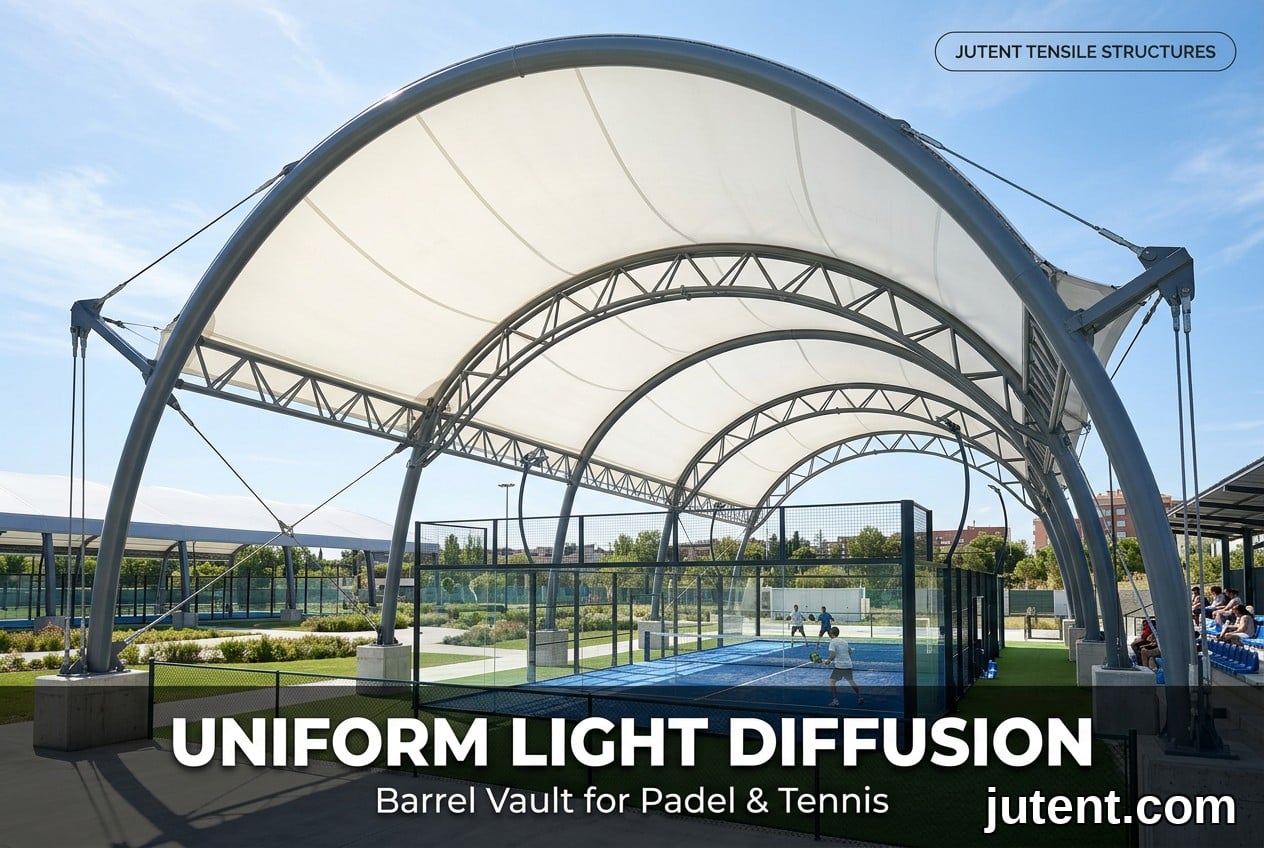
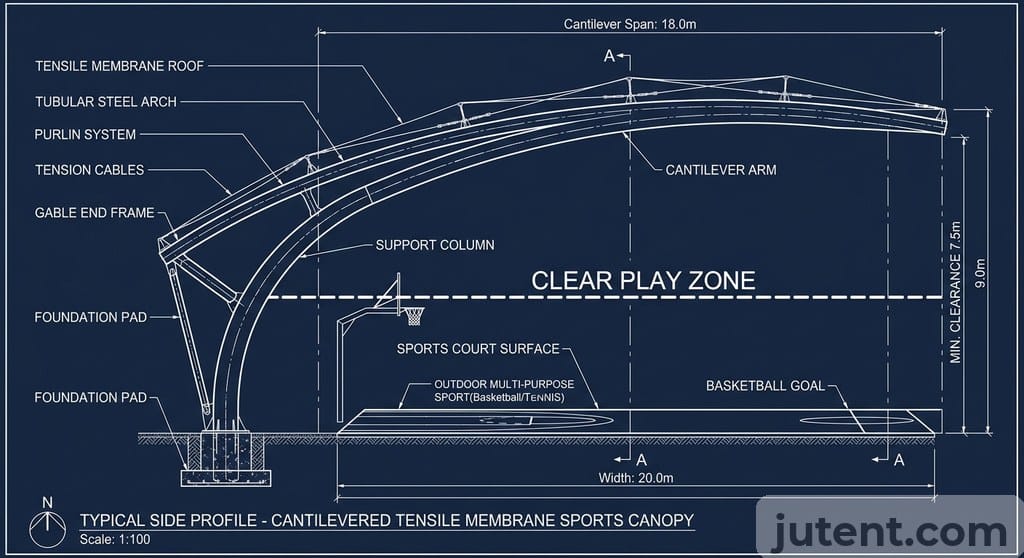
For padel courts (20m × 10m standard) and pickleball courts (13.4m × 6.1m), the cantilever form is particularly effective because it keeps the playing area entirely free of columns. A 10-meter cantilever over a padel court requires 300mm steel sections and 2.5m × 2.5m foundations in a 120 km/h wind zone.
A cantilever projecting 10 meters over a padel court or 12 meters over a tennis court sideline acts as a massive sail.
A highly efficient cone structure might require 12–18 kg of steel per square meter for a 15m span in a 120 km/h wind zone. A long-span cantilever in the same wind zone can easily demand 25–35 kg/㎡.
For a custom tensile canopy quote for your sports court project, contact our engineering team with your court dimensions and wind load requirements.
“`